Sign up now to unlock Rewards offers.
Free standard next‑day delivery to most UK areas

Bathroom Basin Care Guide
Does Hair Dye Stain Ceramic or Stone Resin Basins?
Understand the risks, compare basin materials and discover gentle ways to deal with hair dye spills.
Durovin Bathrooms · Basin Care & Maintenance
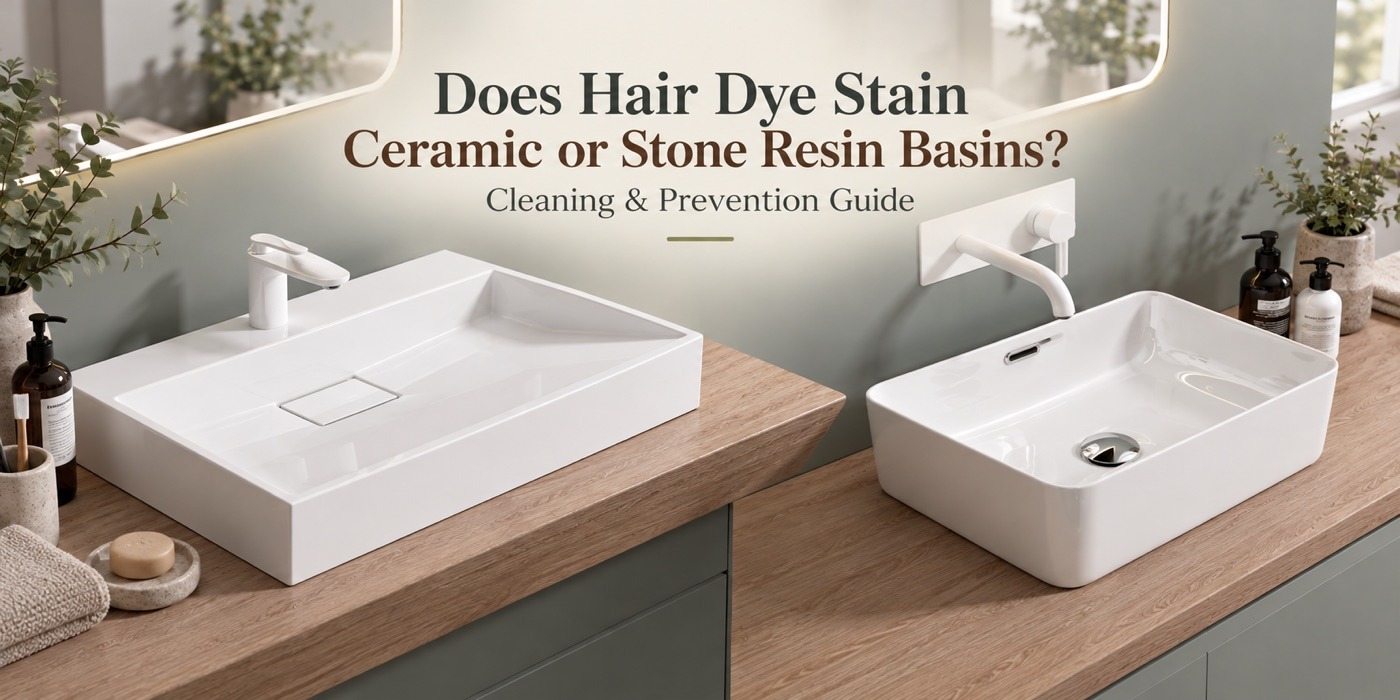
Colouring your hair at home is convenient, but a splash of dye on your bathroom basin can be worrying. Whether you have a ceramic basin or a stone resin basin, you may wonder if the colour will rinse away or leave a lasting mark.
The short answer is that hair dye can potentially stain either material. The outcome depends on the dye formulation, contact time, surface condition and the basin’s finish. A smooth, well-maintained surface is often easier to clean, but no basin should be assumed to be completely stain-proof.
Quick answer: rinse spills promptly with water and clean gently using a soft cloth and a cleaner approved for your basin. Avoid harsh stain removers unless the manufacturer specifically recommends them.
Can Hair Dye Stain a Bathroom Basin?
Hair colouring products contain pigments and other ingredients intended to change the colour of hair. When they come into contact with bathroom surfaces, they may leave visible marks, particularly if they are left to dry.
Several factors influence the risk:
- The formulation and pigment concentration of the hair colouring product.
- How long the product remains in contact with the basin.
- Whether the basin has an intact glaze or protective finish.
- Any existing scratches, chips, worn coatings or textured areas.
- How quickly and appropriately the spill is cleaned.
Even a relatively non-absorbent surface can develop a visible mark after prolonged exposure to concentrated colour.
Does Hair Dye Stain Ceramic Basins?
Most Ceramic Basins have a glazed surface that helps protect the underlying ceramic. An intact glaze is typically smooth and relatively non-absorbent, making routine bathroom residue easier to wipe away.
If dye is rinsed away quickly, it may leave no visible mark. However, dark or strongly pigmented products can still cause staining, especially if left for a long time or if the glaze is scratched, chipped or worn.
How to Clean Hair Dye from a Ceramic Basin
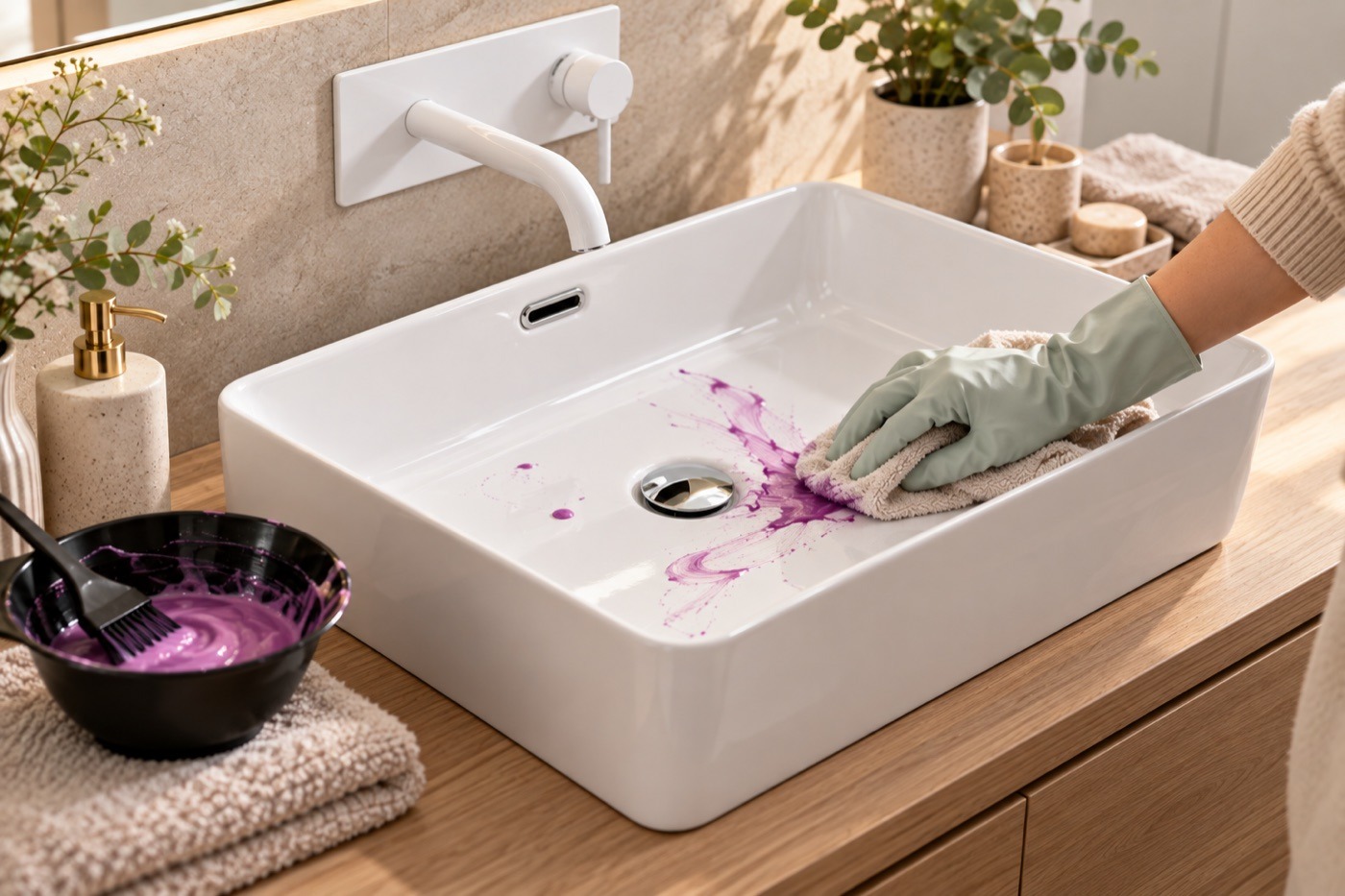
- Rinse the affected area promptly with clean water.
- Use a soft cloth with mild washing-up liquid or a pH-neutral cleaner suitable for the basin.
- Wipe gently rather than scrubbing forcefully.
- Rinse away cleaning residue and dry with a soft microfibre cloth.
- If colour remains, consult the manufacturer's care guidance before further treatment.
Do not assume abrasive pads, strong solvents or bleaching products are safe for every ceramic finish.
Does Hair Dye Stain Stone Resin Basins?
Stone Resin Basins are generally made using mineral fillers and resin binders, sometimes with an additional protective surface layer. Their finishes and chemical resistance can vary significantly between products.
Some stone resin surfaces are designed to resist everyday moisture and bathroom residue, but this does not guarantee resistance to concentrated hair dye. Pigments may leave marks on certain coatings, particularly after prolonged contact. Matt, textured or damaged finishes may require extra care.
How to Clean Hair Dye from a Stone Resin Basin
- Rinse the dye away as soon as possible.
- Use a soft cloth and a mild cleaner approved for the specific product.
- Wipe gently without abrasive scrubbing.
- Rinse thoroughly and dry with a soft cloth.
- Seek manufacturer guidance if a mark remains.
Unless explicitly approved for your basin, avoid bleach, acetone, nail varnish remover, aggressive descalers, strong solvents and abrasive pads. These may alter the coating or finish.
Ceramic vs Stone Resin: Which Is More Stain-Resistant?
Both materials can work well in a bathroom, but their surface finishes differ. The following is a general guide rather than a guarantee for any particular product.
| Feature | Ceramic Basin | Stone Resin Basin |
|---|---|---|
| Typical surface | Glazed ceramic | Resin-based surface or protective coating, depending on design |
| Everyday cleaning | Generally straightforward with intact glaze | Depends on the finish and care instructions |
| Hair dye staining | Possible, especially with prolonged contact or damaged glaze | Possible; performance varies by coating and formulation |
| Recommended approach | Prompt rinsing and gentle cleaning | Prompt rinsing and manufacturer-approved cleaning |
| Key precaution | Protect the glaze from chips and scratches | Protect the surface finish and coating |
If ease of routine cleaning is your main priority, an intact glazed ceramic surface is often a practical option. Stone resin can also be suitable, particularly where its design appeals to you, provided its specific care requirements are followed.
Do Different Hair Colouring Products Cause Different Stains?
Not all hair products behave in the same way. Staining potential depends on the exact ingredients, pigments and how they interact with the basin surface.
| Product | What to know |
|---|---|
| Permanent hair dye | May leave persistent marks, especially if not rinsed promptly. |
| Semi-permanent hair dye | Strongly pigmented shades can also create stubborn stains; they are not necessarily safer for basin surfaces. |
| Temporary hair colour | May still leave marks despite being designed to wash out of hair. |
| Purple shampoo | Violet pigments can leave visible residue on some surfaces. |
| Colour-depositing conditioner | Added pigments may transfer onto the basin if left in contact. |
Do not rely on labels such as “temporary” or “wash-out” as evidence that a product cannot stain bathroom fixtures.
What If Hair Dye Has Already Dried on Your Basin?
Dried hair dye can be more difficult to remove than a fresh spill. Begin with warm water, a soft cloth and a mild cleaner suitable for your basin. Allow the approved cleaner to work according to its instructions, without excessive scrubbing.
If the mark remains, avoid repeatedly applying stronger products or combining cleaning chemicals. Check the manufacturer's guidance or request material-specific advice. Some marks may be persistent, and attempting to remove them aggressively can cause additional damage.
For stone resin in particular, do not sand, polish or refinish the surface unless the manufacturer explicitly recommends a suitable procedure.
Can Hair Dye Damage a Basin Surface, Not Just Stain It?
Staining and surface damage are different. A stain is a visible colour mark, while surface damage can involve changes to the coating, texture, gloss or appearance of the basin.
Some hair colouring formulations contain alkaline ingredients or oxidising agents. Depending on the surface material and finish, prolonged exposure to certain products may affect the surface. Equally, an unsuitable stain remover may cause more harm than the original spill.
A coloured mark does not automatically mean the basin is permanently damaged. However, a change in texture, peeling, dullness or coating deterioration should not be treated as an ordinary stain. Stop using aggressive cleaners and consult the product manufacturer.
How to Prevent Hair Dye Stains on Your Basin
- Protect the area before colouring your hair with a suitable, non-scratching protective container or covering.
- Rinse any splashes immediately rather than allowing dye to dry.
- Keep dye brushes, mixing bowls, gloves and stained towels off the basin surface.
- Use only gentle cleaning products suitable for the specific basin finish.
- Maintain the surface carefully and avoid scratching or damaging its protective layer.
When rinsing coloured hair over a basin, flush away pigmented water promptly and check the bowl and waste area for residue afterwards.
Choosing the Right Basin for Your Bathroom
A basin should suit your daily routine as well as your bathroom style. Material and finish are important, but so are installation type, available space and the manufacturer's care recommendations.
Ceramic Bathroom Basins
Ceramic is a versatile choice for bathrooms where simple everyday maintenance is important. A Ceramic Counter Top Basin can create a distinctive vanity feature, while Ceramic Wall Hung Basins offer an alternative for bathrooms where a streamlined layout is preferred.
Stone Resin Bathroom Basins
Stone resin offers contemporary styling with a range of shapes and finishes. Consider Stone Resin Counter Top Basins for a modern vanity arrangement or explore Stone Resin Wall Hung Basins for a clean, space-conscious look. Always review the care requirements of the specific model.
Frequently Asked Questions
Can permanent hair dye stain a ceramic sink?
Yes. Glazed ceramic is generally resistant to many everyday stains, but concentrated hair dye may leave marks, particularly after prolonged contact or where the glaze is damaged.
Can hair dye permanently stain a stone resin basin?
It is possible. Some pigments may leave persistent discolouration depending on the coating, surface condition and contact time.
Which is easier to clean after a hair dye spill: ceramic or stone resin?
Intact glazed ceramic is generally straightforward to clean. Stone resin cleaning performance varies with the product's composition and finish.
Can I use bleach to remove hair dye stains?
Do not use bleach unless the basin manufacturer specifically confirms it is suitable. It may damage some finishes or coatings.
Will purple shampoo stain a bathroom basin?
It can. Pigmented shampoos may leave marks on some surfaces, so rinse away any residue promptly.
Can I use baking soda or a magic eraser?
Both can act abrasively during rubbing. Avoid them unless the manufacturer confirms they are suitable for the basin's finish.
Are white basins more likely to stain?
Colour marks may be more visible on white surfaces, but actual stain resistance depends mainly on the material, finish and exposure.
Can dried hair dye stains be removed completely?
Sometimes, but not always. Start with gentle, approved cleaning methods and seek manufacturer advice if the mark persists.
Final Thoughts
Both ceramic and stone resin basins can develop hair dye stains. Glazed ceramic often offers straightforward everyday cleaning, while stone resin provides a variety of contemporary finishes with product-specific care requirements.
The safest approach is to protect your basin before colouring your hair, rinse spills immediately and use gentle cleaners approved for the material. Explore Durovin Bathrooms' ceramic basin collection and stone resin basin collection to find a design that suits your space and routine.
Care note: This article provides general guidance only. Always follow the cleaning and maintenance instructions supplied with your specific basin and hair colouring product.
Durovin Bathrooms · Bathroom Inspiration & Care
Durovin Bathrooms are based in Walsall, UK and a bathroom supplier to mainland UK. We sell a wide range of products for anyone to improve their bathrooms.
Read More About UsAddress
Unit 14 Bentley Lane Industrial Park, Bentley Lane, Walsall, WS2 8TL
E-Mail us
info@durovinbathrooms.co.ukPhone
01922 627 773© Durovin Bathrooms® 2025