Sign up now to unlock Rewards offers.
Free standard next‑day delivery to most UK areas
Ceramic Basin vs Glass Basin Pros and Cons Guide
Ceramic Basin vs Glass Basin Pros and Cons Compare durability style cleaning cost and installation to choose the best bathroom basin material
Overview: Understanding Ceramic and Glass Basins
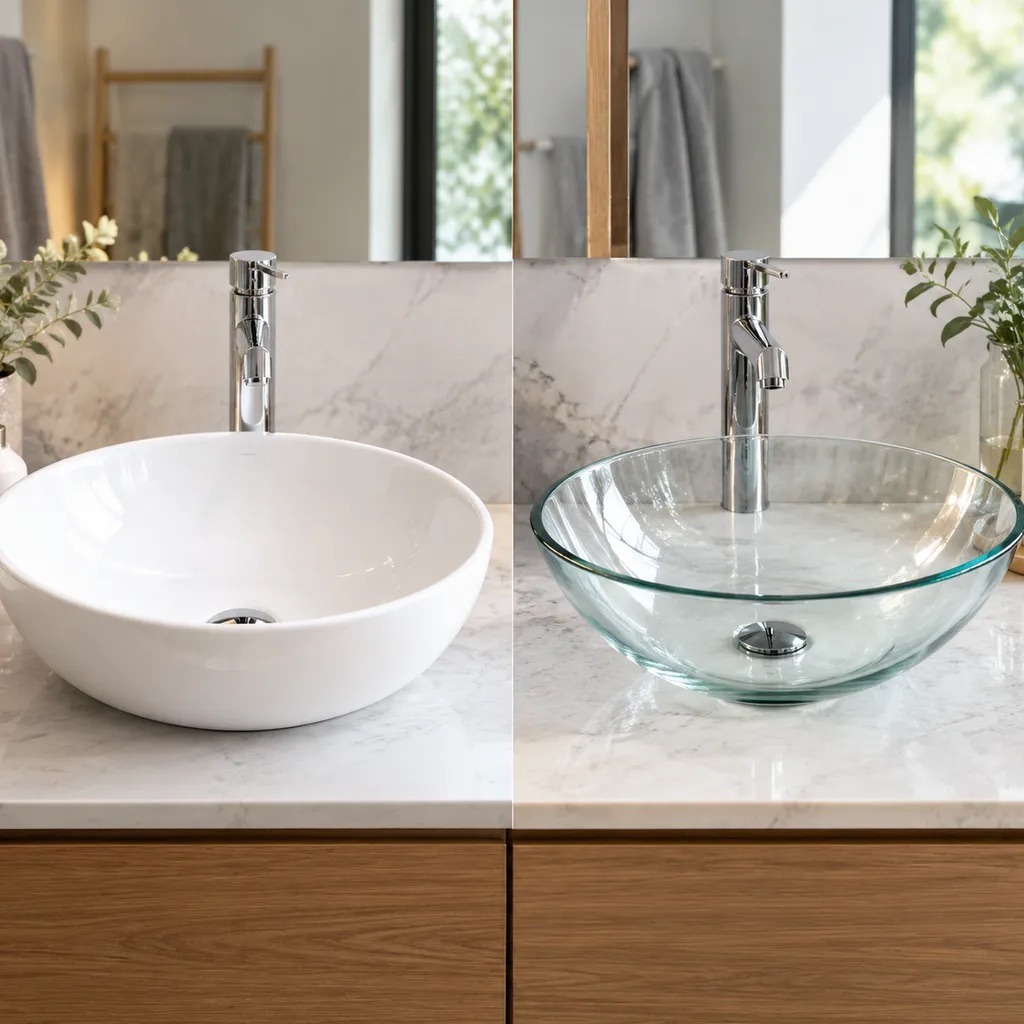
Choosing the right basin sets the foundation for your bathroom's daily functionality and aesthetic appeal. The debate between ceramic and glass basins comes down to a balance between time-tested durability and striking modern design. Both materials bring distinct structural properties, maintenance demands, and visual benefits to a wash space.
What Is a Ceramic Basin?
A ceramic basin is crafted from clay mixtures, such as vitreous china or fine fireclay, shaped under high pressure and fired at elevated kiln temperatures. The surface is finished with an impervious, vitreous glaze that fuses permanently to the core material.
- Material Profile: Dense, heavy clay base with a non-porous glass-like glaze.
- Core Characteristics: Highly resistant to scratches, household chemicals, and fading.
- Common Applications: Undermount vanity units, countertop basins, and traditional wall-hung fixtures.
This construction makes ceramic the global standard for sanitaryware, offering a uniform, classic finish built to withstand decades of frequent use.
What Is a Tempered Glass Basin?
A tempered glass basin is formed from heavy-duty safety glass that undergoes controlled thermal or chemical treatments. This tempering process dramatically increases its surface strength and structural resilience compared to standard annealed glass.
- Material Profile: Toughened safety glass engineered to resist thermal stress and daily wear.
- Core Characteristics: Translucent, smooth, non-absorbent surface with exceptional light reflection.
- Common Applications: Countertop vessel bowls, minimalist washstands, and architectural powder rooms.
Engineered to combine structural safety with modern styling, tempered glass basins introduce clean lines and a lighter visual footprint into contemporary bathroom spaces.
Ceramic Basins: Pros and Cons
Ceramic remains the gold standard in modern sanitaryware for good reason. When we engineer our ceramic basins, the focus is always on blending traditional durability with clean, modern profiles that handle everyday household demands without breaking a sweat.
Pros of Ceramic Bathroom Basins
- Exceptional scratch resistance: The fired glaze creates a hard, non-porous outer shell that easily resists daily wear, abrasive items, and frequent surface contact.
- Superior stain and chemical defense: Everyday toiletries, cosmetics, and standard household cleaners will not penetrate or discolor the vitrified finish.
- Simple daily maintenance: The ultra-smooth surface prevents soap scum and limescale buildup, delivering high ease of cleaning with just a damp cloth.
- Timeless design versatility: Whether you install boldcountertop ceramic basins or integrated units, the clean white aesthetic naturally fits virtually any bathroom vanity basins.
- Thermal stability: Ceramic easily tolerates high water temperatures without risking thermal shock or structural fatigue.
Cons of Ceramic Bathroom Basins
- Substantial weight: Solid vitreous china is dense and heavy, requiring solid support framing or sturdy load-bearing walls for installation.
- Chipping under severe impact: While highly scratch-resistant, dropping heavy, hard objects like glass perfume bottles directly onto the rim can cause surface chips or hairline cracks.
- Limited color variety: Ceramic designs are predominantly finished in classic glossy or matte white, offering less translucent variety than decorative glass alternatives.
Glass Basins: Pros and Cons
Tempered glass basins offer a sleek, architectural alternative to traditional sanitaryware. We often recommend them to homeowners looking to create an airy, luminous focal point, particularly when evaluating vessel sink pros and cons for modern guest baths and contemporary suites.
Pros of Tempered Glass Basins
- Striking Modern Aesthetics: A tempered glass sink delivers immediate visual depth. The translucent, tinted, or frosted finish interacts with bathroom lighting, making smaller vanities feel open and uncluttered.
- Toughened Safety Construction: High-grade glass basins are treated with rapid heating and cooling cycles, giving them reliable sink durability for standard daily routines.
- Non-Porous Surface: Glass cannot absorb stains, dyes, or hygiene products, keeping the basin interior completely sanitary over time.
- Design Versatility: Available in clear, smoked, frosted, or textured bowls, these fixtures easily match minimalist countertops and designer brassware.
Cons of Tempered Glass Basins
- Visible Water Spots and Fingerprints: Limescale, dried splashes, and daily water marks show up quickly on clear and glossy glass surfaces, requiring regular buffing with a microfiber cloth.
- Vulnerability to Scratches: While tough, glass has lower scratch resistance than glazed ceramic. Scrubbing pads and abrasive powder cleaners will dull the finish.
- Thermal Shock Risks: Rapid exposure to sudden temperature shifts, such as pouring boiling water directly into a cold basin, can stress the tempered glass structure.
- Careful Cleaning Demands: Maintaining that showroom shine requires neutral, non-corrosive glass cleaners rather than standard all-purpose bathroom bleach sprays.
Ceramic vs. Glass Basin: Key Feature Comparison
Choosing between a ceramic basin and a glass basin comes down to how you balance daily practicality with modern design. Here is a direct breakdown of how these two materials compare across core performance factors:
| Feature | Ceramic Basin | Glass Basin |
|---|---|---|
| Durability | High impact resistance; glazed surface | High impact strength (tempered); vulnerable to edge chipping |
| Scratch Resistance | Superior; handles dropped items and abrasive cleaners well | Moderate; prone to surface scuffs from sharp objects |
| Maintenance | Low; naturally masks mineral deposits | High; shows water spots, soap scum, and fingerprints quickly |
| Aesthetic Vibe | Classic, clean, timeless | Sleek, contemporary, visual focal point |
| Installation | Heavy; requires standard wastes and solid vanity support | Lighter; mostly countertop vessel mounts with spacer rings |
Durability and Scratch Resistance
- Ceramic Basins: High-fired vitreous china and fine fireclay deliver exceptional sink durability. The thick, protective glaze gives you high scratch resistance, making ceramic remarkably forgiving against heavy daily use and dropped toiletries.
- Tempered Glass Basins: Made from toughened safety glass engineered to withstand impact. While strong, glass remains more vulnerable to edge chipping from heavy objects. You must also factor in thermal shock resistance, as rapid temperature shifts from boiling water can stress the material.
Aesthetic Appeal and Design Versatility
- Ceramic: A dependable classic that complements traditional suites, minimalist designs, and contemporary layouts. It effortlessly coordinates with standard sanitaryware and stone counters across any bathroom vanity basins setup.
- Glass: Creates an instant architectural statement. Clear, frosted, and tinted finishes let light pass through, making glass vessels a striking choice for modern spaces and compact powder room design schemes where you want an airy, open feel.
Cleaning, Maintenance, and Water Spots
- Ceramic: Superior ease of cleaning. The non-porous glazed surface repels stains, resists standard bathroom cleaners, and conceals dried water marks between cleans. For a deeper breakdown of daily upkeep across different profiles, explore our wash basin guide on types and materials.
- Glass: Requires regular attention. Because of transparency and reflection, a tempered glass sink immediately exposes water spots and fingerprints, especially in hard-water areas. Keeping it pristine requires daily wiping with a soft microfiber cloth and mild cleaners.
Cost and Installation Differences
- Ceramic: Heavy construction requires sturdy countertops or dedicated frames, such as a structured ceramic basin with free-standing shelf.Installation relies on standard waste fittings and straightforward mounting brackets.
- Glass: Typically sold as countertop vessel sink materials, making them lighter and simpler to position. However, installation requires careful handling: waste fittings must use dedicated silicone washers and mounting rings rather than excessive torque, preventing stress fractures around the drain hole.
Which Basin Material Is Right for Your Bathroom?
Choosing between these two materials comes down to your household traffic, daily habits, and aesthetic goals. We balance functional longevity against visual drama to ensure your bathroom vanity basins match how you actually live.
| Factor | Ceramic Basin | Glass Basin |
|---|---|---|
| Best Room Application | Family bathrooms, master baths, cloakrooms | Powder rooms, guest ensuites, designer vanity units |
| Daily Upkeep | Low; forgiving surface | High; demands wiping after use |
| Impact & Scratch Profile | Outstanding scratch resistance | High impact strength (tempered); vulnerable to surface scuffs |
| Visual Vibe | Clean, architectural, timeless | Modern, light-enhancing, contemporary |
When to Choose a Ceramic Basin
Opt for a ceramic or porcelain bathroom sink when practical durability and ease of cleaning are non-negotiable.
- High-traffic environments: If you share a space with kids or multiple family members, ceramic handles heavy drops, daily toothpaste spills, and routine wear without showing age.
- Low-maintenance routines: The glazed, non-porous vitreous surface resists hard water deposits, soaps, and acidic cleansers.
- Compact layouts: For tight powder rooms or half-baths, cloakroom ceramic basins provide enduring utility without requiring constant surface buffing.
When to Choose a Glass Basin
Select a tempered glass sink when styling a stunning focal point in an architectural or guest space.
- Powder room design: Low-traffic areas let you showcase translucent finishes, frosted textures, or vibrant tints without the stress of constant cleaning.
- Maximizing light and space: Clear and tinted vessel sink materials reflect ambient light, keeping compact countertops from looking visually heavy.
- Modern aesthetic priority: A glass bowl instantly elevates minimalist vanities, delivering a custom designer feel that standard fixtures cannot match.
Key Factors to Consider Before Buying
Before finalizing your setup, evaluate these practical details:
- Maintenance tolerance: Glass surfaces require frequent wiping to prevent water spots and fingerprints. Ceramic is far more forgiving of mineral-heavy water.
- Mounting requirements: Determine whether a countertop vs wall hung basin best fits your counter depth and structural support.
- Plumbing and waste pairing: Glass basins often lack an overflow, meaning you need a free-flow or non-slotted waste. Ceramic options typically incorporate standard overflow designs.
- Long-term sink durability: Ceramic remains the industry benchmark for decade-long, scratch-free performance under relentless daily use. Glass offers high structural safety through thermal tempering, but the surface demands gentle, non-abrasive cleaning agents.
Durovin Bathrooms are based in Walsall, UK and a bathroom supplier to mainland UK. We sell a wide range of products for anyone to improve their bathrooms.
Read More About UsAddress
Unit 14 Bentley Lane Industrial Park, Bentley Lane, Walsall, WS2 8TL
E-Mail us
info@durovinbathrooms.co.ukPhone
01922 627 773© Durovin Bathrooms® 2025