Sign up now to unlock Rewards offers.
Free standard next‑day delivery to most UK areas

Stone Kitchen Basin Is It Right for You Pros Cons and Care
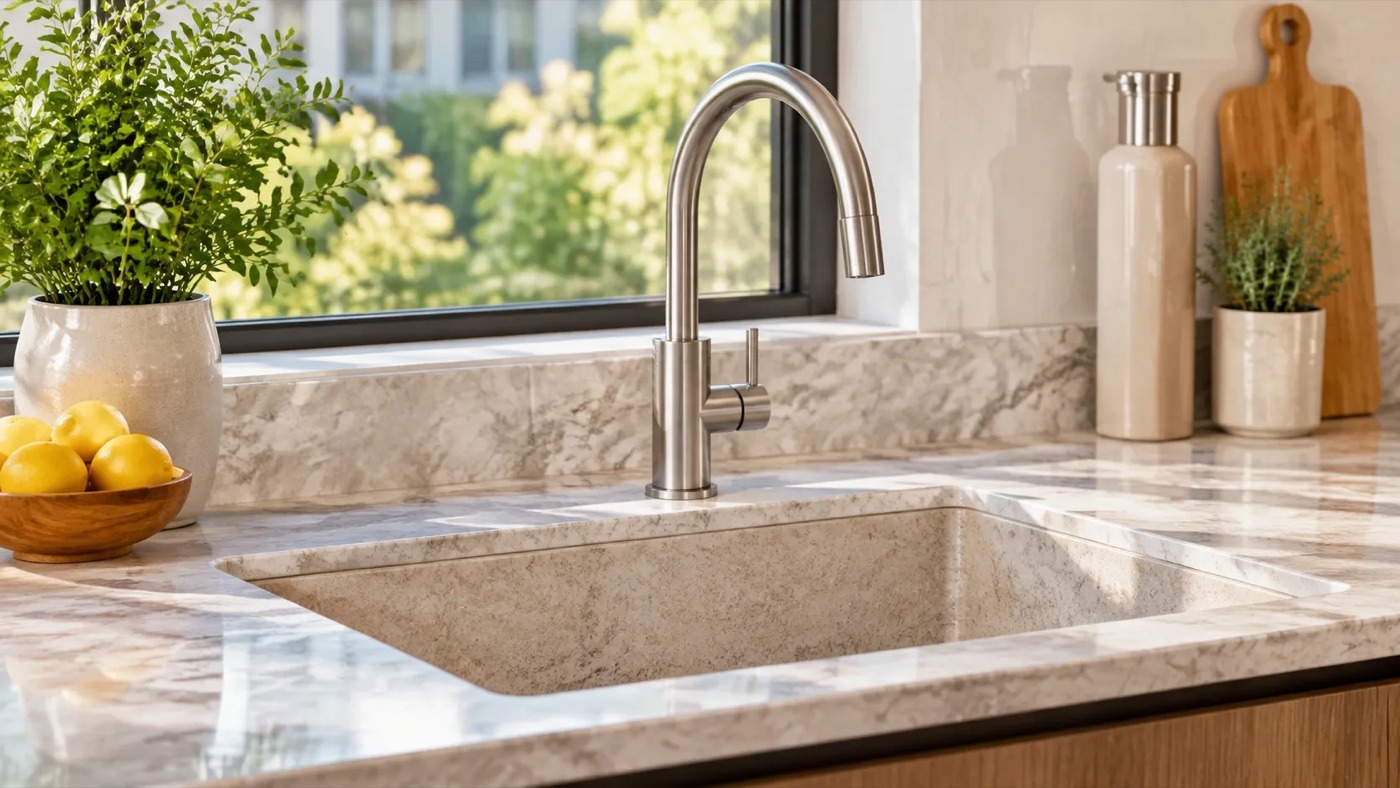
Understanding Natural Stone Kitchen Basins
A stone kitchen basin is a transformative architectural fixture that shifts a kitchen from purely functional to striking and timeless. Sourced directly from the earth, these basins offer an organic luxury that synthetic materials simply cannot replicate.
What Defines a Natural Stone Sink?
A true natural stone sink is carved directly from quarried rock. Rather than being molded or chemically bonded, each basin is sculpted from a single solid block of stone or precision-crafted from thick, hand-matched architectural slabs.
- Monolithic Craftsmanship: Hand-carved from a single geological piece, ensuring continuous grain and structural integrity.
- One-of-a-Kind Aesthetics: Every basin features distinct veining, fossil patterns, and natural tonal variations formed over millions of years.
- Surface Finishes: Available in honed (matte, velvety), polished (glossy, reflective), or chiseled (rustic, raw) textures to complement any interior theme.
Natural Stone vs. Composite Stone Basins
Homeowners often confuse genuine natural stone sinks with engineered composite alternatives. Understanding the structural differences is crucial before investing:
| Feature | Natural Stone Basin | Composite Stone Basin |
|---|---|---|
| Material Composition | 100% genuine quarried stone (granite, marble, soapstone, limestone) | ~80% crushed quartz/stone dust bound with 20% acrylic resins |
| Visual Uniqueness | Completely unique; no two sinks are ever identical | Uniform pattern; manufactured repeatedly from molds |
| Heat Resistance | Naturally fireproof; handles hot cookware directly from the stove | High, but vulnerable to resin warping or thermal shock above 400°F |
| Longevity | Lifespan measured in centuries; can be re-honed or restored | High durability, but difficult to repair if chipped or bleached |
| Weight | Exceptionally heavy; requires reinforced cabinet support | Moderate weight; standard cabinetry installations usually suffice |
Choosing genuine natural stone means choosing authentic geological beauty, unmatched tactile presence, and a kitchen focal point that ages gracefully over a lifetime.
The Key Advantages of a Stone Kitchen Basin
Choosing the right sink defines how your kitchen looks and functions daily. A stone kitchen basin delivers an elevated architectural presence while handling the heaviest kitchen tasks with ease. Here is why investing in a solid stone sink transforms your space.
Unmatched Durability and Heat Resistance
A stone kitchen basin handles punishment that would ruin acrylic, fireclay, or composite alternatives. Carved directly from solid earth rock, natural stone gives you lifetime structural resilience.
- Exceptional Heat Resistance: You can place hot pots, baking sheets, and boiling water directly into the basin without worrying about scorching, melting, or thermal shock cracking.
- Superior Scratch Resistance: Dense geological stones withstand heavy cast-iron cookware, sharp utensils, and daily abrasive contact.
- Solid-Body Construction: Because the material is uniform all the way through, minor surface abrasions do not reveal an unsightly base layer beneath.
Understanding how different minerals react under pressure is key; our detailed look atnatural stone basin types and benefits highlights how these solid materials maintain their integrity over decades of hard culinary use.
Timeless Aesthetic and Unique Character
Mass-produced sinks cannot replicate the authentic beauty of natural stone sinks. Every block of stone possesses its own distinct personality formed over millions of years.
- Bespoke Visual Appeal: Unique veining, subtle fossil remnants, and nuanced mineral deposits ensure your basin is entirely one of a kind.
- Design Versatility: Raw chiseled edges suit rustic and farmhouse themes, while smooth, honed finishes blend seamlessly into sleek modern and transitional layouts.
- Value-Adding Patina: Instead of fading or degrading, quality stone ages gracefully, gaining depth and character as your home matures.
Natural Sound Dampening and Noise Reduction
Stainless steel sinks frequently amplify the noise of clattering flatware, heavy water spray, and garbage disposals. Natural stone solves this problem inherently through its sheer density and mass.
- Quiet Operation: The thick, solid walls naturally deaden vibrations, eliminating the harsh, hollow clanging of pots and pans.
- Acoustic Insulation: Water hitting the basin floor creates a soft, muffled sound rather than an echo, fostering a quieter, more peaceful kitchen environment.
Popular Stone Materials for Kitchen Basins
Choosing the right natural stone sinks comes down to how you cook, clean, and use your kitchen every day. Each stone slab brings distinct mineral compositions, textures, and maintenance profiles to your workspace.
Granite Sinks: High Durability and Low Porosity
When it comes to sheer toughness, a granite kitchen sink stands out as the industry workhorse. Formed under extreme subterranean pressure, granite delivers exceptional density that shrugs off heavy daily wear.
- Scratch Resistance: You can drop pots, slide heavy cast-iron skillets, and handle cutlery without worrying about deep gouges.
- Heat Resistance: Granite handles boiling water and hot cookware straight from the stovetop without blistering or cracking.
- Low Porosity: While all natural stone requires periodic treatment, granite naturally resists liquids better than softer minerals, minimizing moisture intrusion.
Marble Basins: Classic Luxury and Elegant Veining
A carved marble basin instantly elevates a space, turning an everyday kitchen workstation into a statement of architectural luxury. Its distinctive, fluid veining means no two installations are ever identical.
However, marble is softer and calciferous, meaning it requires mindful care. Acidic substances like lemon juice, vinegar, or wine will etch the polished surface if left to sit. When deciding between materials, comparing a ceramic basin vs marble basin for durability and style highlights how natural marble trades low-maintenance utility for unmatched, authentic character. Proper sealing is essential to keep a marble sink pristine over decades of service.
Soapstone Sinks: Non-Porous and Stain Resistant
Soapstone offers a velvety, matte finish that feels warm to the touch. Quarried primarily with high talc content, it behaves differently from almost any other natural stone option on the market.
| Feature | Performance in Soapstone |
|---|---|
| Porosity | Completely non-porous; requires zero chemical sealers |
| Stain Resistance | Impervious to acids, oils, chemicals, and wine |
| Heat Tolerance | High thermal stability; handles boiling liquids easily |
| Surface Hardness | Relatively soft; scratches can be buffed out with light mineral oil |
Limestone and Travertine: Warm, Rustic Charm
For transitional, Mediterranean, or modern farmhouse kitchens, limestone sinks and honed travertine basins offer earthy beige, ivory, and taupe tones. These sedimentary stones feature subtle mottling and fossils embedded in the grain, giving your washing station an authentic, grounded feel.
Because both limestone and travertine are inherently porous and susceptible to acid etching, they demand rigorous sealing schedules. They reward you with a soft, aged patina that deepens in character over years of honest kitchen use.
Pros and Cons: Is a Stone Basin Right for You?
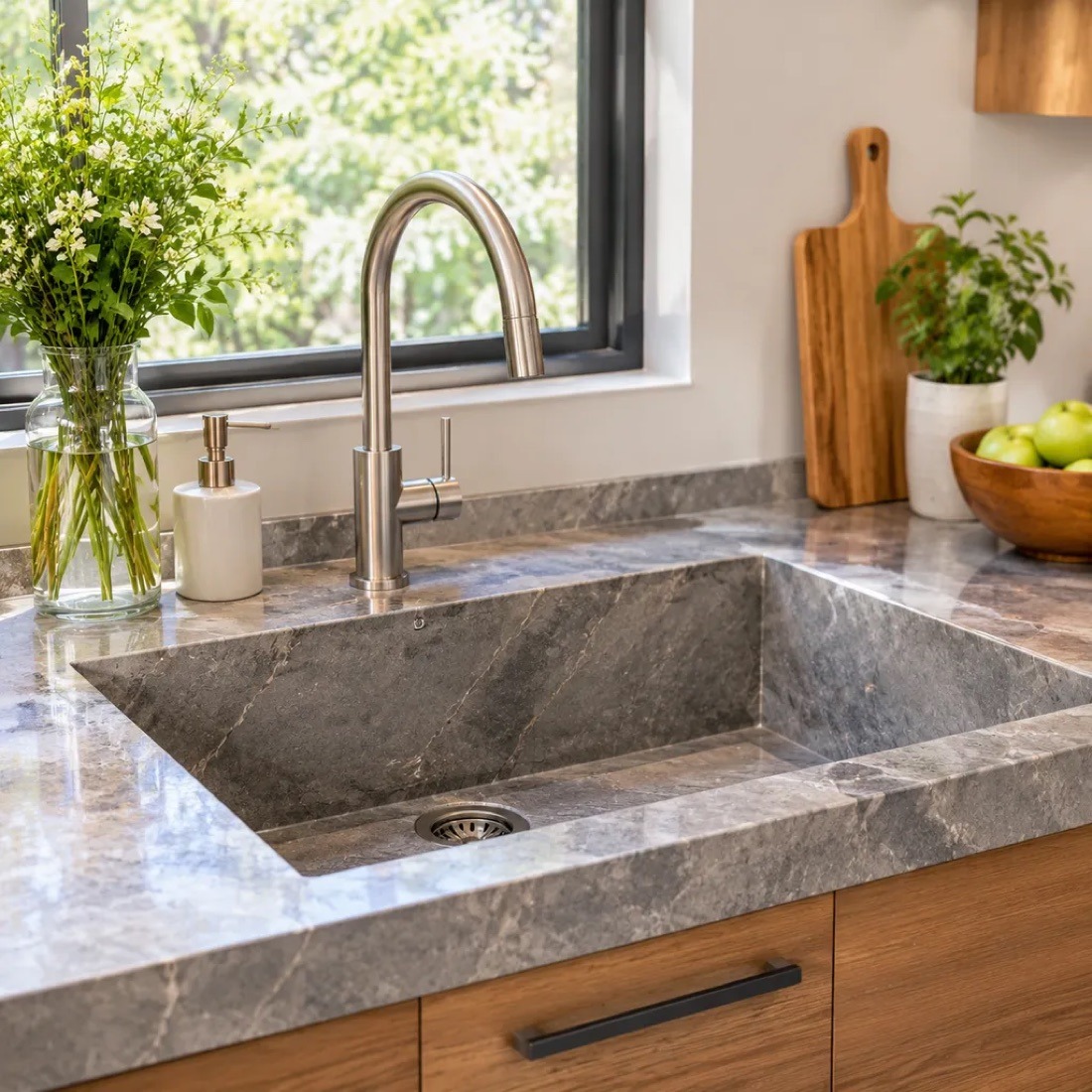
Choosing a natural stone kitchen basin comes down to balancing raw luxury with daily practicality. Just as homeowners weigh trade-offs in ourceramic basin vs glass basin pros and cons guide, selecting the right kitchen centerpiece requires an honest look at how you cook, clean, and maintain your space.
The Major Pros of Stone Kitchen Sinks
- Exceptional Longevity: Natural stone is nearly indestructible under normal use, outlasting traditional stainless steel or composite models by decades.
- Unbeatable Heat Resistance: You can place hot pots and boiling pans directly into the basin without burning, melting, or discoloring the surface.
- One-of-a-Kind Aesthetics: Every carved block features distinct veining, mineral deposits, and tonal shifts, giving your kitchen an exclusive custom appearance.
- Acoustic Dampening: The sheer mass of solid stone absorbs water rattle and garbage disposal vibrations far better than thin metal bowls.
| Feature | Stone Kitchen Basin | Stainless Steel Sink | Composite Granite Sink |
|---|---|---|---|
| Heat Resistance | Extreme | High | Moderate (Can blister) |
| Scratch Resistance | Very High | Prone to swirl marks | High |
| Aesthetic Uniqueness | 100% Unique | Industrial / Uniform | Engineered / Uniform |
| Sound Absorption | Superior | Poor (Echoes) | Good |
The Cons: Weight, Cost, and Maintenance Needs
- Massive Weight: A solid stone kitchen basin can easily exceed 100 to 150 kilograms when filled with water. Standard cabinetry cannot support this without custom timber reinforcement.
- Higher Upfront Investment: Material extraction, precision masonry carving, and specialized shipping make natural stone one of the most expensive kitchen sink materials on the market.
- Routine Sealing Required: Porous stones like marble, limestone, and light granites require dedicated sealing every six to twelve months to prevent oil, wine, and acid staining.
- Dish Breakage Risk: The uncompromising hardness of dense stone offers zero cushion; dropping a wine glass or ceramic mug onto the base will almost certainly shatter it.
Evaluating Long-Term Value and Property Investment
A stone kitchen basin is not a quick cosmetic upgrade; it is an architectural fixture. While the upfront purchase and structural preparation cost significantly more than standard options, the return on investment comes through lifetime durability and property value. Unlike acrylic or enamel surfaces that chip and require replacement every ten to fifteen years, a well-sealed stone basin stays structurally sound for generations, serving as an irreplaceable high-end asset for luxury home resale.
Installation Options and Cabinet Requirements
Installing a stone kitchen basin requires thoughtful planning, precise carpentry, and the right mounting method. Natural stone carries significant physical presence, meaning off-the-shelf cabinetry setups often need tailored adjustments before fitting day.
Farmhouse Apron-Front vs. Undermount Basins
Choosing the right mounting profile shapes both the workflow and visual impact of your kitchen. The two primary choices for solid stone are apron-front (farmhouse) and undermount configurations.
| Feature | Farmhouse Apron-Front | Undermount Basin |
|---|---|---|
| Aesthetic | Exposed front profile, rustic or modern focal point | Sleek, continuous counter surface, minimalist |
| Cabinet Impact | Requires an apron-specific base cabinet | Fits within standard base units with modifications |
| Cleaning | Direct wipe-in from sides and back; wipe exposed front | Effortless sweep from all countertop edges directly into the bowl |
| Installation Complexity | High (requires custom fascia cutouts) | Moderate to High (requires hidden reinforcement) |
Apron-front models proudly showcase the raw or polished face of the stone, while undermount designs emphasize a seamless counter transition. If you appreciate this tactile look in smaller adjoining utility spaces or open-plan areas, styling continuity with a stone counter top basincreates a cohesive natural design language across your home.
Structural Support Needs for Heavy Stone Sinks
Natural stone sinks often weigh anywhere from 50 kg to upwards of 150 kg dry. Add a full basin of water and heavy cookware, and your cabinet base must handle significant stress.
- Custom Timber Cradling: Never rely on standard sink clips or silicone adhesives alone. We build a dedicated 2x4 timber frame inside the cabinet carcass to support the sink's base perimeter securely.
- Cabinet Wall Reinforcement: Standard MDF or particleboard base units require reinforced upright panels or steel brackets anchored directly into wall studs.
- Level Load Distribution: The support frame must be completely level. Uneven resting points cause pressure concentrations, which can crack natural stone when subjected to heavy impacts.
Pairing Stone Basins with Countertops and Fixtures
Getting the full value out of a stone basin comes down to balanced design pairings:
- Countertop Harmony: Pair solid stone sinks with durable, non-flexing worktops such as quartz, solid granite, or dense hardwood butcher blocks. Avoid flexible laminate surfaces, which can shift and compromise the perimeter seal.
- High-Arc Tapware: Due to the deep bowl profiles common in stone basins, select high-arc bridge faucets or pull-down sprayers. These provide ample clearance for oversized pots and pans.
- Finish Contrasts: Matte black, brushed brass, and aged bronze hardware contrast striking natural veining, highlighting the handcrafted texture of the basin.
How to Maintain and Care for a Stone Kitchen Basin
Taking care of a natural stone sink is simpler than most people think, but it does require consistency. Because raw stone possesses natural porosity, adopting a mindful cleaning routine protects your surface against discoloration while preserving the mineral's organic depth and character.
Daily Cleaning and Stain Prevention Tips
Daily maintenance comes down to preventing standing liquids from interacting with the raw stone surface. Using harsh chemical cleaners or abrasive scouring pads will strip protective treatments and damage the stone's finish over time.
- Rinse thoroughly after use: Food acids like citrus juice, vinegar, tomato sauce, and coffee can etch soft minerals like limestone or marble. Always wash residues down the drain right away.
- Wash with mild surfactants: Use standard pH-neutral dish soap, warm water, and a soft microfiber cloth or non-scratch sponge for your regular washdown.
- Wipe it dry: Standing water contains minerals that create cloudy limescale marks, particularly in hard water regions. A fast buff with a dry towel keeps the basin spotless.
- Avoid reactive cleaners: Never use bleach, ammonia, oven cleaners, or acidic descaling agents on your basin.
| Task | Recommended Method | What to Avoid |
|---|---|---|
| Routine Wash | Warm water + pH-neutral dish soap | Bleach, ammonia, citrus-based sprays |
| Scrubbing | Soft microfiber cloth or cellulose sponge | Steel wool, abrasive scouring pads |
| Drying | Clean cotton towel buff | Leaving puddles to air-dry |
Sealing Protocols to Protect Your Investment
Proper sealing is the single most important step for maintaining long-term stain resistance and scratch resistance in porous stone kitchen sinks. Penetrating impregnator sealers soak into the micro-pores of the stone, repelling oils and liquids without leaving an unnatural plastic film on the surface.
- Perform the Water Droplet Test: Place a few drops of tap water onto the basin surface and let them sit for 15 minutes. If the water beads tightly, the seal is intact. If the stone darkens or absorbs the moisture, reapplication is necessary.
- Determine Your Schedule: Dense stones like granite generally need sealing once a year, whereas softer stones like travertine or marble benefit from sealing every 6 to 8 months under regular kitchen use.
- Application Steps: Deep-clean the basin and let it dry completely for 24 hours. Wipe a quality penetrating stone sealer evenly across the entire surface using a lint-free cloth. Allow it to absorb for the manufacturer-recommended duration (usually 10 to 15 minutes), buff away every drop of excess liquid, and let the sink cure fully before running water.
Durovin Bathrooms are based in Walsall, UK and a bathroom supplier to mainland UK. We sell a wide range of products for anyone to improve their bathrooms.
Read More About UsAddress
Unit 14 Bentley Lane Industrial Park, Bentley Lane, Walsall, WS2 8TL
E-Mail us
info@durovinbathrooms.co.ukPhone
01922 627 773© Durovin Bathrooms® 2025