Sign up now to unlock Rewards offers.
Free standard next‑day delivery to most UK areas
Is a Frameless Shower Enclosure Worth the Higher Cost?
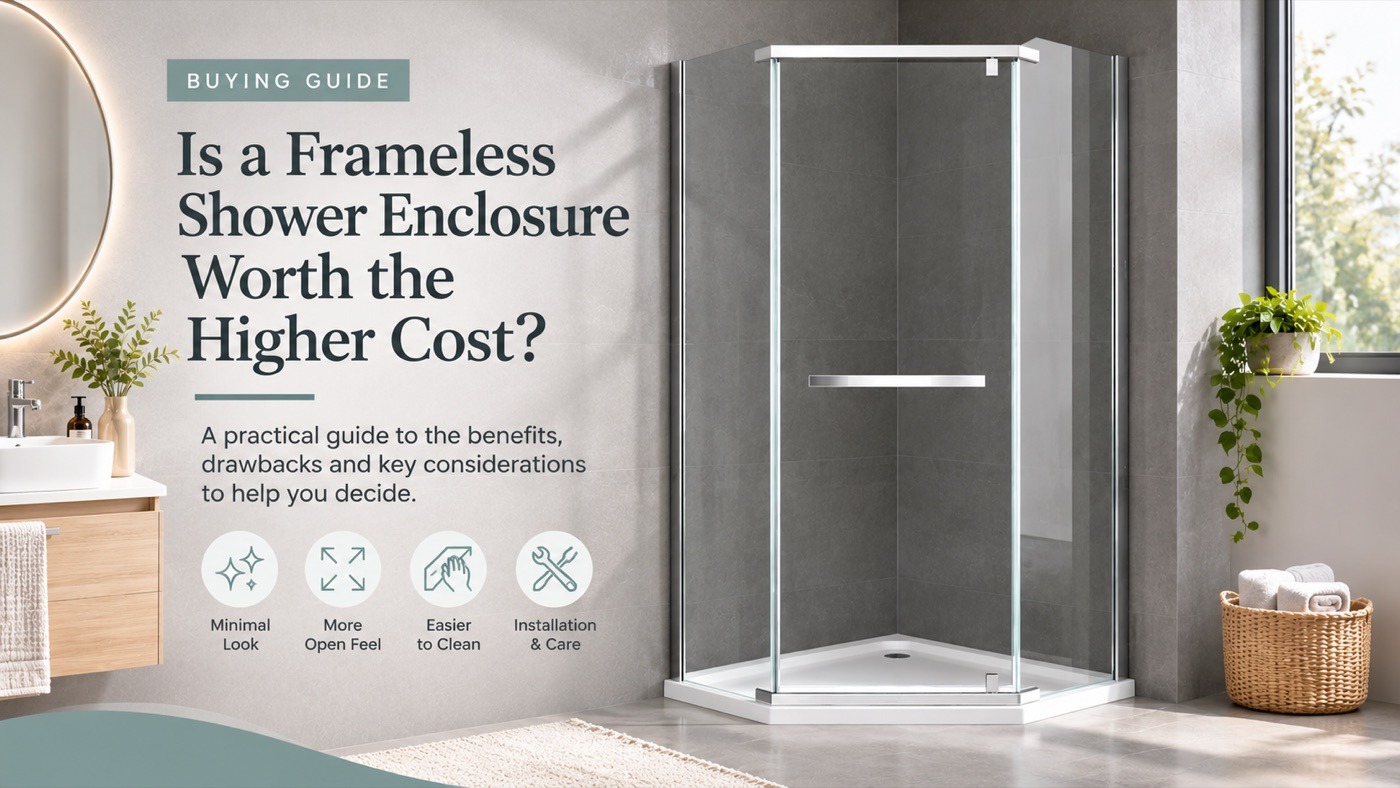
A frameless shower enclosure can transform the appearance of a bathroom, creating a clean, open space with minimal visible metalwork. However, compared with traditional framed designs, frameless enclosures often come with a higher price tag. So, is the extra cost really justified?
For homeowners who value a minimalist appearance, an open feel and fewer frame sections to clean, a frameless shower enclosure can be worth the additional investment. However, a framed or semi-frameless alternative may offer better value if budget, installation flexibility or straightforward maintenance are the main priorities.
The right choice depends on more than appearance alone. Glass construction, door mechanisms, bathroom layout, installation requirements and long-term maintenance all influence whether a frameless enclosure is worth paying more for.
What Makes Frameless Shower Enclosures More Expensive?
The difference in cost largely comes down to how the enclosure is constructed and supported.
Traditional framed shower enclosures use metal profiles around the glass panels to provide structural support. Frameless designs reduce this visible framing, relying more heavily on the glass, specialised fittings and carefully designed fixing systems.
Several factors can influence the overall cost.
Glass Thickness and Construction
Frameless shower enclosures often use relatively thick toughened safety glass to provide the rigidity required for their design. The appropriate glass specification depends on the enclosure's construction, dimensions and support system.
Thicker glass generally requires more material and may increase manufacturing, handling and installation costs. However, thicker glass does not automatically make an enclosure better or safer. The complete design, appropriate safety glazing and correct installation are equally important.
Specialist Hinges, Rollers and Fittings
Without extensive surrounding frames, the quality and positioning of the fittings become particularly important.
Frameless sliding doors require suitable rollers and guide mechanisms, while hinged designs depend on correctly specified hinges and secure fixing points.
The complexity and quality of these components can influence the purchase price, operating experience and maintenance requirements.
Installation Requirements
Frameless shower enclosures may require more precise alignment and careful preparation than some framed alternatives.
Uneven walls, unsuitable fixing surfaces or insufficient adjustment allowances can complicate installation. Larger glass panels may also require additional handling.
Professional installation is recommended to ensure the enclosure is securely fitted, correctly sealed and operates as intended.
What Are the Benefits of a Frameless Shower Enclosure?
Although frameless shower enclosures can cost more, their advantages extend beyond visual appearance.
1. A Clean, Minimalist Appearance
One of the main reasons homeowners choose frameless shower enclosures is their understated design.
With fewer visible metal profiles, the glass becomes the dominant feature, allowing surrounding tiles, wall finishes and bathroom fittings to remain more visible.
This can be particularly appealing in contemporary bathrooms where simplicity and visual continuity are important.
2. A More Open Feeling in the Bathroom
Frameless glass can help a bathroom feel more spacious by reducing visual barriers.
Clear glass allows light to pass through the shower area, creating a stronger connection between the enclosure and the rest of the room.
This effect can be especially useful in smaller bathrooms, although the actual usable space still depends on the enclosure's dimensions and door configuration.
3. Fewer Frame Sections to Clean
Traditional framed enclosures can have additional edges, joints and channels where soap residue, limescale and moisture accumulate.
Frameless designs generally have fewer surrounding frame sections, potentially making some surfaces easier to access during cleaning.
However, frameless does not mean maintenance-free. Glass panels, seals, hinges, rollers and any remaining tracks still require regular attention.
4. Flexible Design Options
Frameless shower enclosures are available in several configurations, allowing homeowners to select a design that suits their bathroom layout.
Sliding, bi-folding and hinged doors offer different approaches to access and space management. Rectangular, corner and three-sided arrangements can also accommodate different installation positions.
The most suitable configuration depends on the available floor space, surrounding fixtures and preferred shower entrance.
Are There Any Drawbacks to Consider?
A frameless enclosure is not necessarily the best choice for every bathroom.
Higher Initial Cost
Frameless models may cost more than comparable framed alternatives, particularly where specialised fittings, larger glass panels or complex configurations are involved.
The overall budget should account for the enclosure itself, any required shower tray, installation labour and additional preparation work.
More Demanding Installation Conditions
Some frameless designs offer less tolerance for uneven walls than framed enclosures with adjustable profiles.
Accurate measurements and suitable fixing surfaces are essential. Any necessary wall preparation or adjustments may increase installation complexity.
Maintenance of Moving Components
Sliding rollers, hinges, seals and other fittings may require inspection, cleaning or eventual replacement.
The availability of compatible replacement components should therefore be considered alongside the initial purchase price.
Frameless vs Semi-Frameless vs Framed Shower Enclosures
Understanding the differences between enclosure types can help determine whether paying more for a frameless design makes sense.
| Feature | Frameless | Semi-Frameless | Framed |
|---|---|---|---|
| Appearance | Minimal visible framing | Reduced framing | More prominent profiles |
| Initial cost | Often higher | Usually mid-range | Often more economical |
| Glass construction | Often thicker, depending on design | Varies by model | Supported by surrounding frames |
| Cleaning | Fewer frame sections | Some frame sections | More profiles and channels |
| Installation | May require precise alignment | Depends on adjustment system | Often offers greater adjustment |
| Design appeal | Open and minimalist | Balanced appearance | Structured and traditional or contemporary |
These are general comparisons. Actual performance, installation flexibility and cost depend on the individual product rather than the enclosure category alone.
The key difference is not simply quality, but where the design places its emphasis. Frameless enclosures prioritise minimal visible structure, while framed designs use more extensive profiles for support and adjustment. Semi-frameless models provide a compromise between the two.
Which Frameless Shower Door Is Best for Your Bathroom?
Choosing the right door mechanism can be just as important as deciding whether to invest in a frameless design.
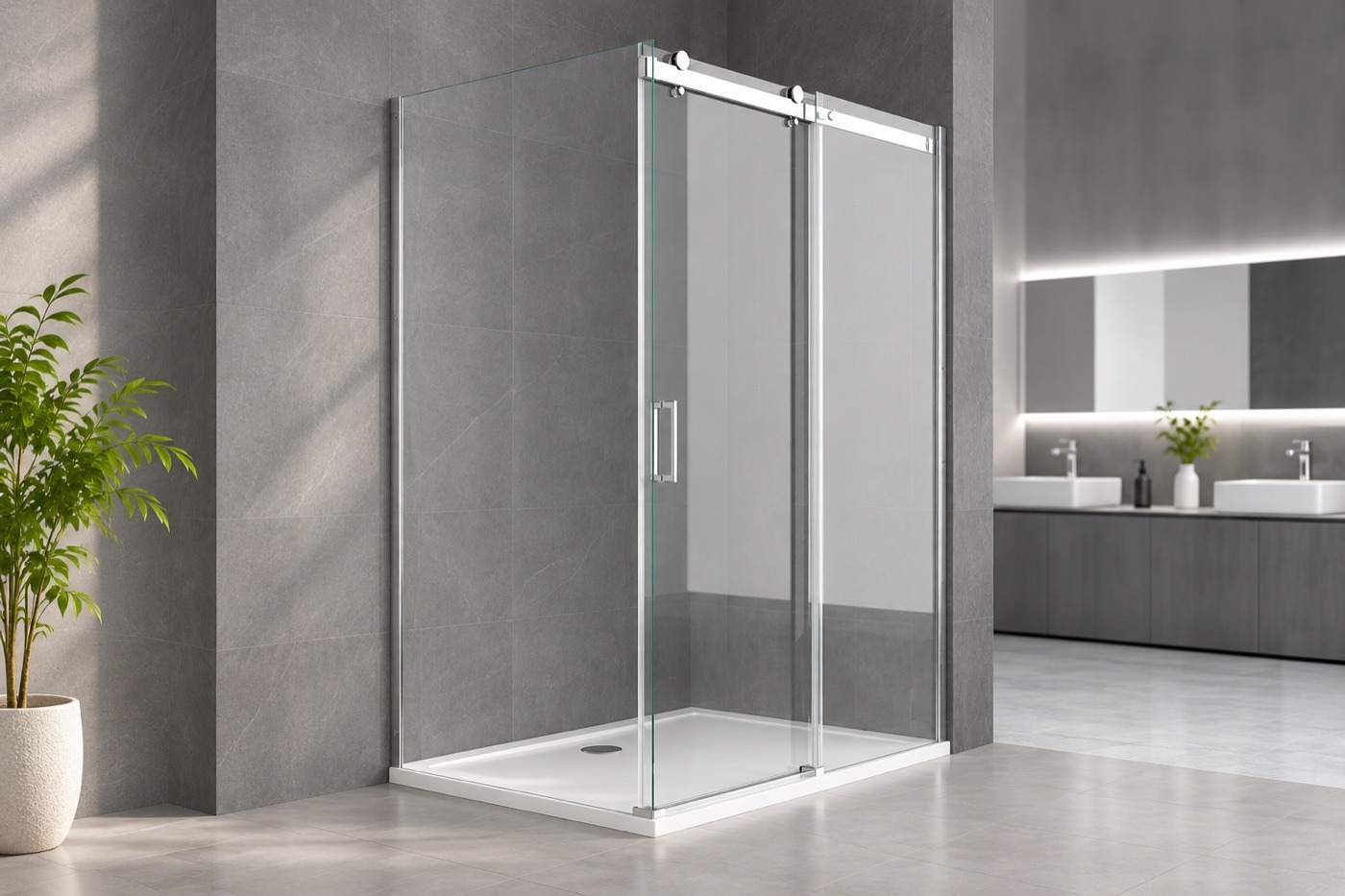
Sliding Shower Doors: Ideal for Limited External Space
Sliding doors move along a track rather than swinging into the bathroom. This makes them a practical option where toilets, basins or other fixtures restrict the space outside the shower.
For a shower installed within a recess, the Frameless Sliding Shower Door offers a minimalist glass design without requiring outward door clearance.
For corner installations, the Rectangular Frameless Sliding Shower Enclosure combines a sliding entrance with a side glass panel.
The Frameless Rectangular Sliding Shower Enclosure provides another rectangular corner configuration to consider.
Sliding designs are particularly useful where external clearance is limited, although the fixed and moving panels influence the available entrance width.
Bi-Folding Shower Doors: A Space-Saving Alternative
Bi-folding shower doors use folding panels to reduce the clearance needed when opening.
They can be particularly useful in compact bathrooms where a conventional outward-opening door would interfere with nearby fixtures.
The Frameless Bi-Folding Shower Door is an option for suitable shower recesses.
For corner layouts, the Frameless Bi-Folding Shower Enclosure combines the folding mechanism with a side panel.
When choosing a bi-folding design, consider the folded panel position, entrance width and accessibility of the moving joints for cleaning.
Pivot and Hinged Shower Doors: A More Open Entrance
Hinged and pivot shower doors can provide a straightforward opening mechanism and an open entrance, depending on the door dimensions and configuration.
The Frameless Pivot Hinged Shower Door is worth considering where the bathroom layout allows sufficient door movement.
Before selecting a hinged design, check the direction of opening, clearance from nearby fixtures and the available entrance space.
U-Shaped Shower Enclosures: For Three-Sided Glass Installations
A U-shaped shower enclosure can be suitable where the shower projects from a wall rather than occupying a conventional corner or recess.
The Rectangular Frameless U-Shaped Sliding Shower Enclosure uses a three-sided arrangement with a sliding entrance.
This configuration can create a distinct shower area while retaining the open appearance of clear glass.
However, the additional glass panels, fittings and installation requirements should be considered when comparing overall costs.
Pentagonal Shower Enclosures: For Corner Space Planning
Pentagonal enclosures use an angled front to create a shower area within a corner.
This shape can be useful where a conventional rectangular enclosure would extend too far into the bathroom.
The Frameless Pentagonal Pivot Hinged Shower Enclosure combines an angled configuration with a hinged entrance.
Check the door opening clearance and usable internal space before choosing this layout, as the angled front affects both movement around the enclosure and the showering area.
Are Frameless Shower Enclosures Easier to Clean and Maintain?
Frameless shower enclosures can be easier to clean in certain areas, but the difference depends on the design.
The reduced amount of surrounding metalwork means there may be fewer frame joints and channels where dirt accumulates. Large glass surfaces can also be straightforward to wipe down.
However, frameless enclosures still require regular maintenance.
To keep the enclosure in good condition:
- Wipe or squeegee the glass after showering to reduce watermarks.
- Clean the glass with products suitable for its surface and any protective coating.
- Remove soap residue from seals, hinges, rollers and tracks.
- Check seals and fittings periodically for signs of wear.
- Avoid abrasive cleaners that could damage glass coatings or metal finishes.
A sliding frameless enclosure may have more moving components to maintain than a simple hinged design. Similarly, a bi-folding door has additional folding joints that require attention.
Therefore, ease of cleaning should be assessed by the complete enclosure design, not simply whether it is frameless.
Why Professional Installation Matters
To achieve the best possible finish and performance, we recommend having your frameless shower enclosure installed by an experienced professional. Correct measurement, secure fixings, accurate glass alignment and appropriate sealing all contribute to a neat appearance, smooth door operation and effective water containment.
Professional installation for the best results
A qualified, experienced installer can assess wall and floor conditions, follow the manufacturer's fitting instructions and ensure the enclosure is properly supported and aligned. This helps reduce avoidable fitting issues and gives the enclosure the best opportunity to perform as intended.
Even when professionally fitted, no shower enclosure should be assumed to be completely watertight. Avoid directing the shower spray at door gaps, seals or glass joints.
Does a Frameless Shower Enclosure Last Longer?
A higher purchase price does not automatically guarantee a longer lifespan.
The durability of a shower enclosure depends on several factors, including glass quality, hardware construction, installation accuracy, frequency of use and maintenance.
A well-manufactured framed enclosure can remain functional for many years, just as a poorly installed frameless model may develop problems prematurely.
When comparing products, look beyond appearance and consider the quality of hinges or rollers, replacement seal availability, warranty terms and installation requirements.
Choosing an enclosure that is appropriate for the bathroom conditions is often more important than choosing the most expensive design.
Who Should Choose a Frameless Shower Enclosure?
A frameless shower enclosure may be particularly suitable if:
- You prefer a minimalist bathroom with limited visible metalwork.
- You want clear glass to showcase tiles or decorative wall finishes.
- Your bathroom layout supports the chosen door mechanism.
- You are comfortable investing more in the enclosure's appearance and construction.
- You are prepared to maintain the glass and fittings regularly.
A framed or semi-frameless enclosure may be more appropriate if keeping initial costs down is a priority, additional wall adjustment is needed, or you prefer a more structured appearance.
Neither option is universally better. The right choice depends on how well the enclosure suits the bathroom and the homeowner's priorities.
Is a Frameless Shower Enclosure Worth the Investment?
Yes, a frameless shower enclosure can be worth the higher cost, particularly if its minimalist appearance, open feel and reduced framing are important to your bathroom design.
However, the additional expense should be viewed primarily as an investment in the preferred design and construction rather than a guarantee of superior durability or performance.
For smaller bathrooms, the door mechanism and enclosure shape may have a greater practical impact than the presence or absence of framing. A well-chosen sliding or bi-folding design, for example, can help manage limited clearance regardless of its visual style.
Before making a decision, compare the full installation cost, available space, hardware requirements and ongoing maintenance.
At Durovin Bathrooms, you can explore a range of frameless shower doors and enclosures in different configurations to find a design that suits your bathroom layout and preferences.
Frequently Asked Questions
Are frameless shower enclosures more expensive than framed ones?
Frameless shower enclosures are often more expensive because their construction may require thicker safety glass, specialised fittings and precise installation. However, prices vary according to the enclosure's size, design, materials and hardware.
Are frameless shower enclosures safe?
Yes. A properly designed and installed frameless shower enclosure using appropriate toughened safety glass can provide a safe showering environment. Safety depends on the complete construction, suitable fittings and correct installation rather than the presence of a surrounding frame alone.
Do frameless shower enclosures leak more?
Not necessarily. No shower enclosure is designed to be 100% watertight, whether frameless, semi-frameless or framed. Water containment depends on the enclosure design, seals, shower tray and correct installation. To help prevent water escaping, avoid directing the shower spray straight at the glass joints, door gaps or seals. Ensure the enclosure is installed and used in accordance with the manufacturer’s instructions.
Are frameless shower enclosures suitable for small bathrooms?
Yes. Frameless designs can help small bathrooms feel more open, while sliding and bi-folding doors can reduce the clearance required outside the shower. Always check the enclosure dimensions and available entrance space before purchasing.
Do frameless shower enclosures need professional installation?
For the best possible finish and performance, professional installation is recommended. An experienced installer can check the fixing surfaces, align the glass accurately, secure the fittings and apply seals in accordance with the manufacturer’s instructions. This supports safe operation, smooth door movement and effective water containment.
Are frameless shower enclosures easier to clean?
They can be easier to clean around areas with reduced framing, as there are fewer surrounding profiles where residue may accumulate. However, glass, seals, hinges and tracks still require regular cleaning and maintenance.
Is a frameless shower enclosure better than a semi-frameless one?
Neither is automatically better. Frameless designs provide a more minimal appearance, while semi-frameless enclosures can offer a balance between reduced framing, structural support and cost. The best option depends on the bathroom layout, installation conditions and personal preferences.
Durovin Bathrooms are based in Walsall, UK and a bathroom supplier to mainland UK. We sell a wide range of products for anyone to improve their bathrooms.
Read More About UsAddress
Unit 14 Bentley Lane Industrial Park, Bentley Lane, Walsall, WS2 8TL
E-Mail us
info@durovinbathrooms.co.ukPhone
01922 627 773© Durovin Bathrooms® 2025