Sign up now to unlock Rewards offers.
Free standard next‑day delivery to most UK areas
Ceramic Countertop Basin Design Ideas
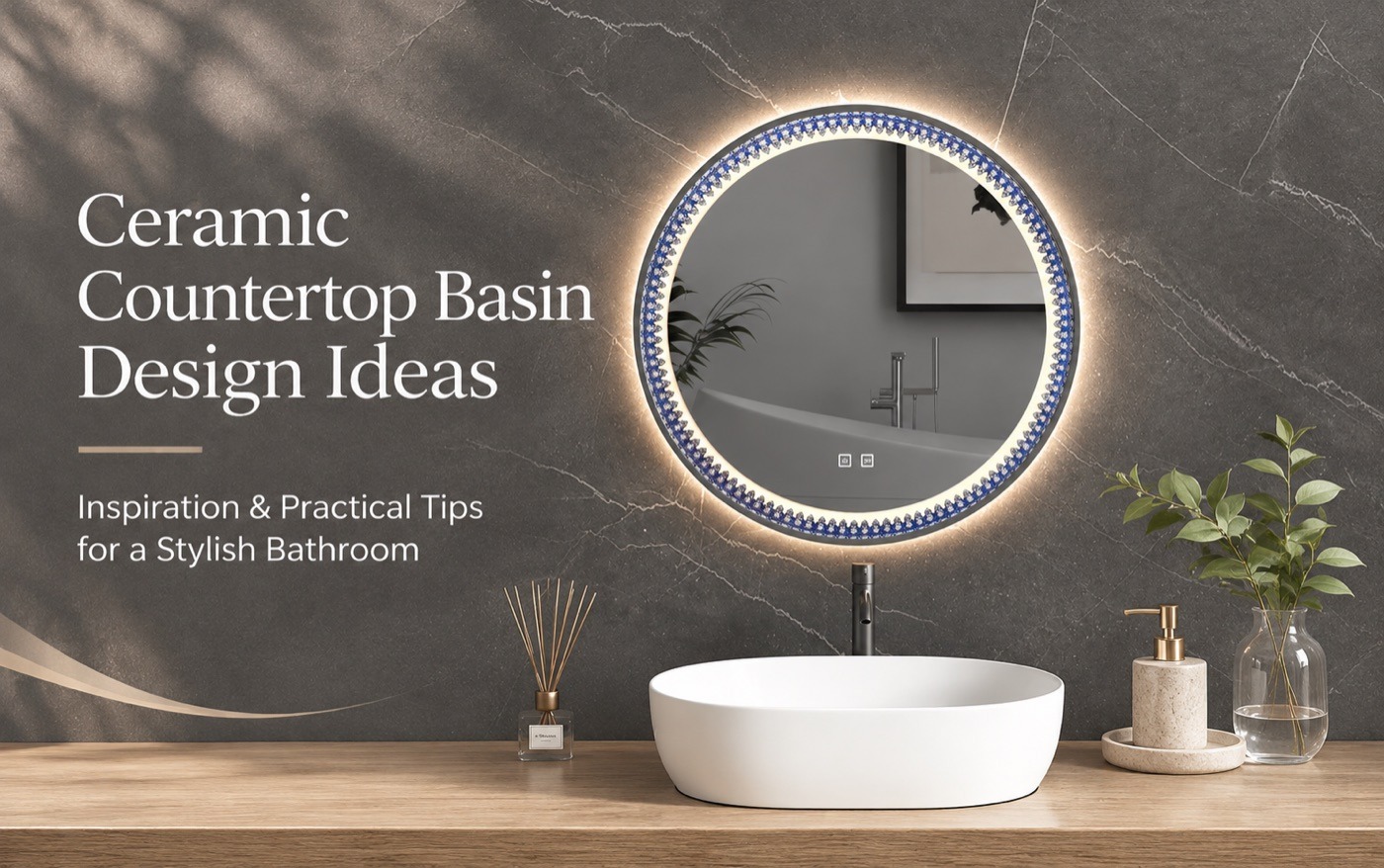
A ceramic countertop basin can transform an ordinary bathroom vanity into an attractive focal point. Sitting above the worktop, the visible bowl becomes part of the design rather than disappearing into the furniture. From soft curves to defined rectangular outlines, ceramic countertop basins can complement a wide range of bathroom styles.
Whether you are updating a family bathroom, planning an en-suite or working with a compact cloakroom, the right combination of basin, furniture, taps and finishes can make a noticeable difference. These design ideas explore both appearance and practical considerations, helping you create a washing area that feels balanced and comfortable to use.
1. Create a Clean, Minimalist Bathroom
Minimalist bathrooms rely on considered proportions, restrained colour and uncluttered surfaces. A white ceramic countertop basin works particularly well because the visible bowl provides interest without requiring elaborate decoration.
Pair a rounded basin with a floating vanity in pale oak, white or soft grey. Large-format tiles and a simple mirror can make the composition feel cohesive. Rather than matching every finish exactly, use subtle variations in texture to avoid a flat appearance.
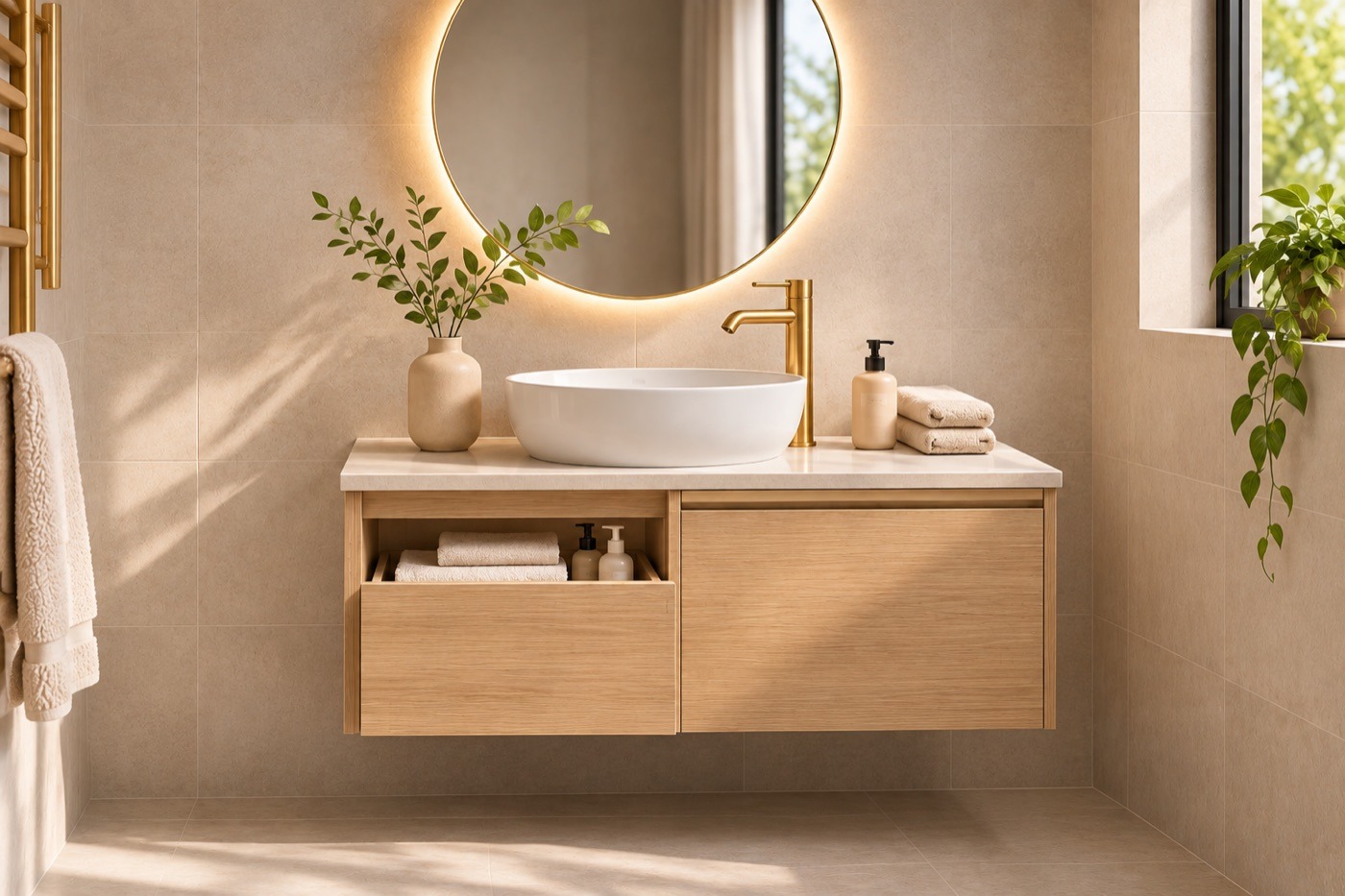
Keep everyday toiletries in drawers where possible, leaving only a soap dispenser or small tray on the worktop. Warm task lighting can soften the overall look while making the basin practical to use.
2. Choose a Basin Shape That Complements Your Bathroom
Round ceramic countertop basins
A round basin brings symmetry and soft curves to a room dominated by straight-edged cabinets and tiles. It can work on a compact vanity, provided the basin footprint leaves adequate room for the tap and comfortable use.
Oval ceramic countertop basins
Oval shapes create a flowing, elongated appearance and often look balanced on wider furniture. Their curves pair naturally with wood-effect finishes and softly textured walls.
Rectangular ceramic countertop basins
Rectangular basins introduce a structured, architectural feel. They complement linear mirrors, geometric tiling and contemporary cabinetry. Some designs soften the corners for a less angular appearance.
Choose by actual dimensions, bowl depth and the position of the waste and tap—not by shape alone.
3. Pair White Ceramic Basins with Contrasting Vanity Units
A white basin can stand out against dark wood, charcoal or stone-effect furniture. The contrast defines the bowl's silhouette and gives the vanity area a focal point.
Dark wood-effect finishes add warmth and texture, while charcoal cabinets offer a more graphic contemporary look. For a softer effect, combine white ceramic with light oak and neutral walls.
Browse bathroom vanity units to explore finishes and configurations. Whatever style you choose, check that the worktop and cabinet construction can support the basin and accommodate its plumbing.
4. Make Ceramic Countertop Basins Work in Small Bathrooms
A compact countertop basin can suit a small bathroom, en-suite or cloakroom when the overall layout is planned carefully. Measure the available worktop depth as well as its width, allowing clearance around the bowl and room for the tap.
Slim-depth furniture can preserve walking space, but the basin footprint and waste position become especially important. Wall-hung units may make the floor more visible, creating a sense of openness, although appropriate wall support is essential.
For particularly tight spaces, small ceramic cloakroom basins are another option worth considering where a full-sized countertop basin is impractical.
Use a mirror and a consistent light colour palette to reduce visual clutter, and prioritise storage over decorative accessories.
5. Introduce Natural Materials for a Spa-Inspired Bathroom
A spa-inspired scheme combines calm colours, tactile finishes and soft lighting. A smooth white ceramic bowl provides a clean counterpoint to wood-effect cabinetry and stone-effect tiles.
Try warm beige, cream and muted grey rather than stark contrasts. An oval basin can reinforce the relaxed feel, while a simple tap and minimal accessories keep the composition balanced.
Layer functional mirror lighting with gentler ambient illumination. Natural-looking materials should still be suitable for humid bathroom conditions, especially around cut-outs and exposed worktop edges.
6. Experiment with Different Countertop Materials
Wood-effect worktops
Wood-effect finishes bring warmth and can make white ceramic feel less clinical. Select a bathroom-suitable surface and seal openings according to the manufacturer's guidance.
Marble-effect worktops
Subtle veining gives the vanity a refined appearance. Keep surrounding tiles comparatively simple so the basin and worktop do not compete for attention.
Stone-effect worktops
Light stone tones produce a calm, natural scheme; darker stone effects create stronger contrast. A smooth glazed basin helps balance the textured appearance.
White worktops
White-on-white can look crisp and spacious. Introduce depth through a contrasting cabinet finish, a framed mirror or a carefully selected tap.
Regardless of the material, confirm load capacity, moisture resistance and compatibility with the required basin cut-out.
7. Match Your Countertop Basin with the Right Tap
Because the basin sits above the worktop, tap height and reach are particularly important. A standard-height tap may not provide sufficient clearance.
Tall basin mixer taps
A tall mixer fitted beside or behind the bowl can provide the required height while keeping the installation visually straightforward. Explore basin mixer taps and check the dimensions of the specific model against your basin.
Wall-mounted taps
Wall-mounted fittings leave more of the worktop clear and can create a streamlined appearance. They require suitable plumbing and accurate positioning before the wall is finished.
In either arrangement, check where the water lands in the bowl. Spout reach, outlet height, bowl depth and flow can all affect splashing and comfort.
8. Create a Coordinated Double Basin Vanity
In a spacious shared bathroom, two matching ceramic countertop basins can create a symmetrical washing area. Repeating the same basin, tap and mirror style helps the design feel intentional.
A continuous worktop visually connects the two stations. Drawers or cupboards below can keep the surface clear, while separate mirrors offer a more individual arrangement.
Before choosing a double layout, allow enough width between bowls for comfortable use and verify that the cabinet, worktop and plumbing arrangement can support both installations. Two basins are not always the best choice if they compromise storage or circulation space.
9. Use Colour and Finishes to Define Your Bathroom Style
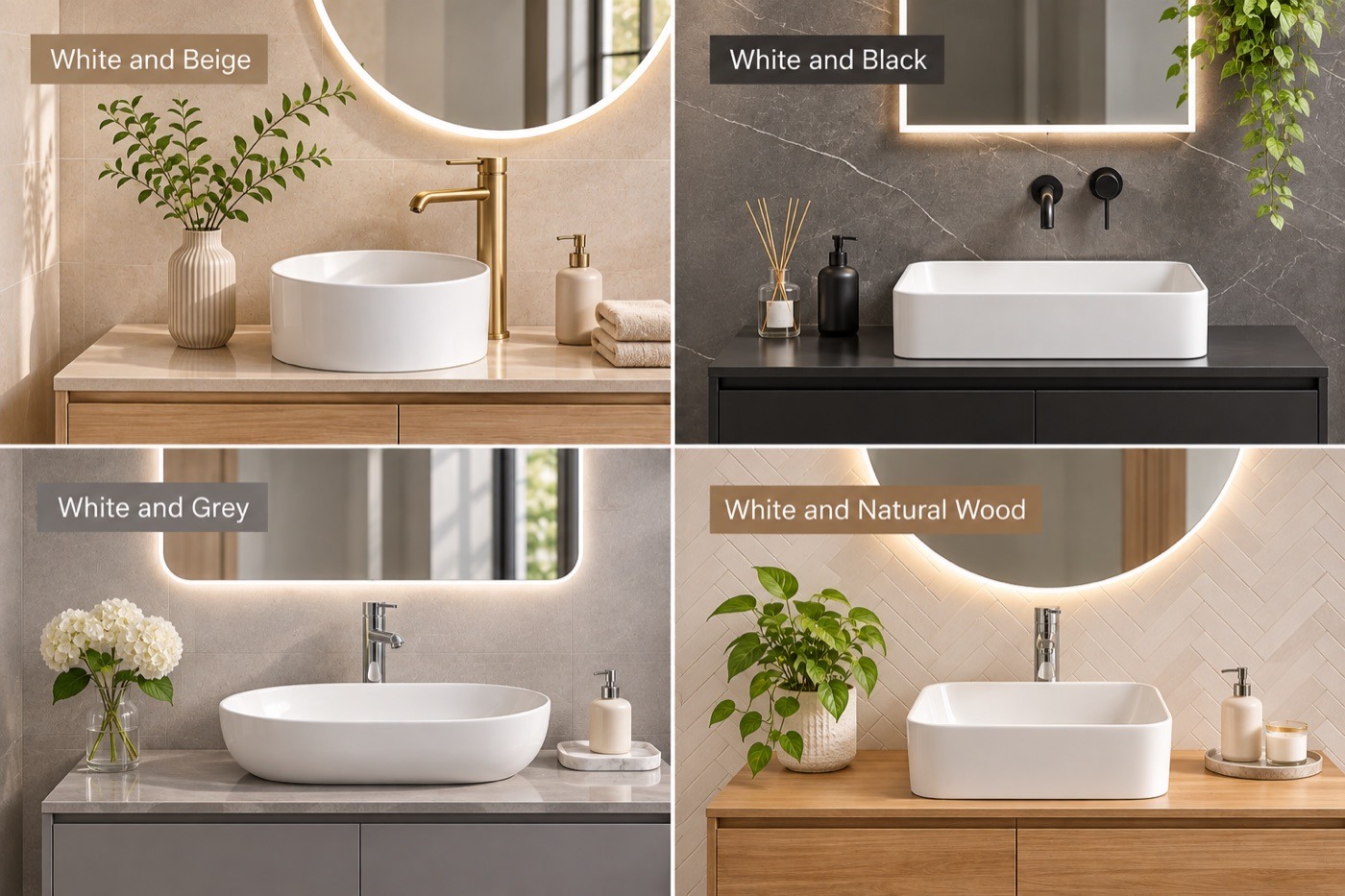
White and beige
Beige tiles, pale wood and a white basin create a soft, warm-neutral scheme suited to calm interiors.
White and black
Black taps, mirror frames or cabinetry create sharper contrast. Repeat dark details selectively rather than throughout every surface.
White and grey
Light grey walls and a darker vanity can provide subtle depth without overpowering the ceramic bowl.
White and natural wood
Wood-effect furniture introduces texture and warmth, working equally well with round, oval and rectangular basins.
Check samples under your bathroom's actual lighting: colours can look different in daylight and artificial light.
10. Complete the Look with Mirrors and Lighting
Choosing suitable bathroom mirrors helps establish the proportions of the vanity area. A round mirror can echo the curves of a circular basin, while a rectangular mirror introduces contrast and structure.
For a double vanity, choose either two coordinated mirrors or one sufficiently wide shared mirror. In compact bathrooms, a larger mirror can reflect light and make the area feel more open.
Lighting should be useful as well as decorative. Aim for even illumination around the face for shaving, skincare and make-up, and ensure fittings are appropriate for their bathroom location.
11. Balance Style with Everyday Practicality
Overall height
The finished washing height includes both the furniture and the basin above it. Check this combined height against the needs of the people who will use the bathroom.
Worktop clearance
Allow room for the bowl, tap and essential items. Check the footprint and required distances from walls and nearby fittings.
Furniture compatibility
Not every vanity unit is designed for a countertop basin. Drawers, shelves and structural panels can interfere with the waste pipe or necessary cut-outs.
Waste and plumbing
Plan the waste opening and tap position before altering the worktop. Follow the basin and furniture manufacturers' instructions, and seek professional installation where needed.
Cleaning
Glazed ceramic is generally straightforward to maintain with a soft cloth and suitable non-abrasive cleaner. Keep the area around the base accessible, as splashes and soap residue can collect there.
Frequently Asked Questions
Are ceramic countertop basins suitable for modern bathrooms?
Yes. Their visible bowl shapes work with minimalist, contemporary and more traditional settings, depending on the furniture, taps and finishes selected.
Which shape works best in a small bathroom?
A compact round or oval basin may work well, but the actual footprint, depth and tap clearance matter more than the shape alone.
Do countertop basins need special taps?
They often need a tall basin mixer or appropriately positioned wall-mounted tap. Check the basin and tap dimensions together.
Can I fit a ceramic countertop basin on a wooden worktop?
Yes, if the worktop is suitable for bathroom use, can support the basin and has appropriately protected cut edges and openings.
Are ceramic countertop basins easy to clean?
Smooth glazed surfaces are generally easy to wipe down. The worktop around the basin base may need additional attention.
Can I install one on an existing vanity unit?
Possibly, provided the unit has adequate support, suitable worktop dimensions and enough clearance for plumbing. Check compatibility before modifying it.
Are they practical for family bathrooms?
They can be, but the finished height, bowl size, tap positioning and needs of children or other users should guide the choice.
Which colours go with a white ceramic basin?
White ceramic works with warm beige, grey, natural wood effects and dark contrasting finishes. Consider lighting and the overall room palette.
Final Thoughts
Ceramic countertop basins offer a versatile starting point for bathrooms of different sizes and styles. Whether you prefer a minimalist scheme, natural textures or bold contrasts, the best results come from coordinating the basin shape with suitable furniture, taps and worktop materials.
Before making a final choice, check dimensions, installation requirements and everyday usability. Explore the range of bathroom basins at Durovin Bathrooms to find options for your next renovation.
Durovin Bathrooms are based in Walsall, UK and a bathroom supplier to mainland UK. We sell a wide range of products for anyone to improve their bathrooms.
Read More About UsAddress
Unit 14 Bentley Lane Industrial Park, Bentley Lane, Walsall, WS2 8TL
E-Mail us
info@durovinbathrooms.co.ukPhone
01922 627 773© Durovin Bathrooms® 2025