Sign up now to unlock Rewards offers.
Free standard next‑day delivery to most UK areas

Ceramic Basin vs Stainless Steel Basin Comparison Guide
Compare Ceramic Basin vs Stainless Steel Basin for durability cleaning design heat resistance cost installation and the best choice for your space
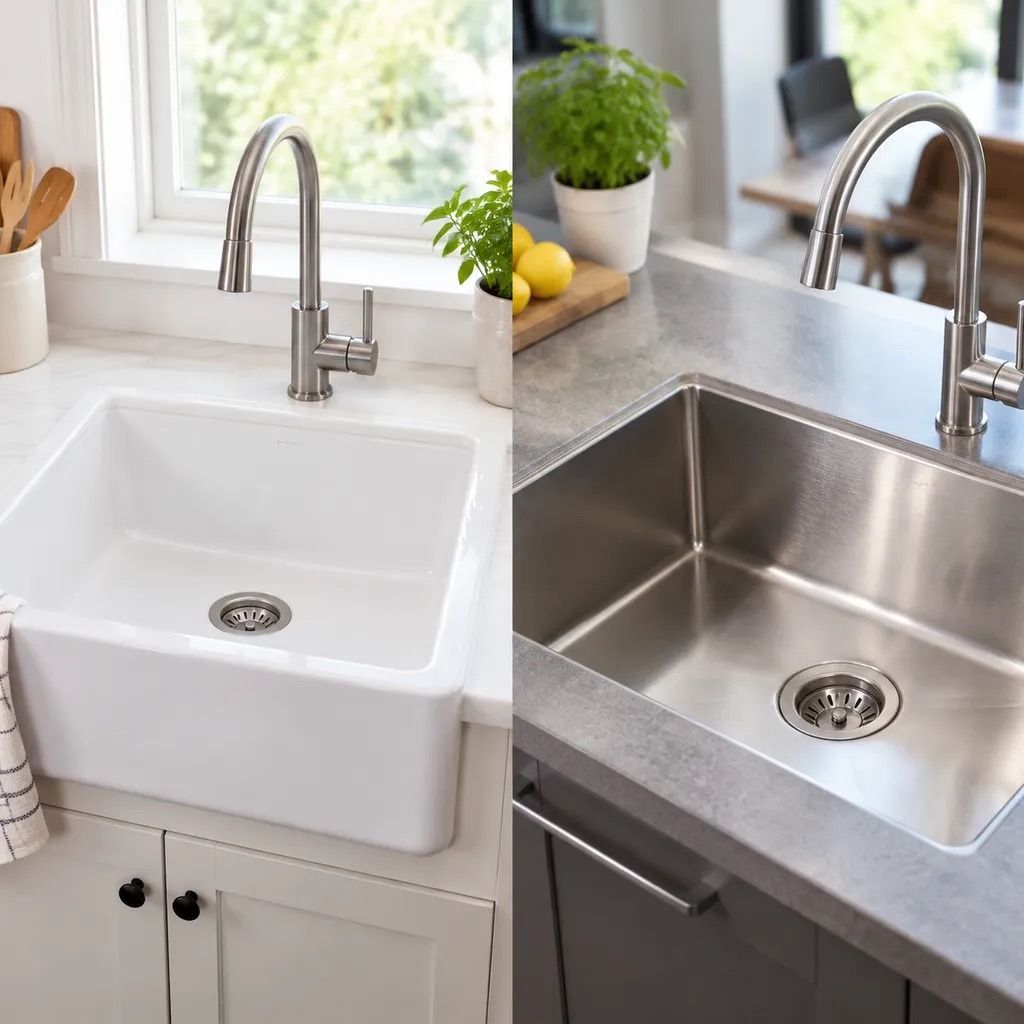
Overview of Ceramic and Stainless Steel Basins
Choosing the right washbasin requires evaluating how different materials perform in terms of daily wear, visual presentation, and long-term reliability. A direct Ceramic Basin vs Stainless Steel Basin: Comparison reveals substantial differences in manufacturing, core structural properties, and aesthetic versatility. Both materials serve critical roles in modern architectural interiors, yet each delivers distinct functional advantages depending on space requirements and usage patterns.
What Is a Ceramic Basin?
A ceramic basin is a sanitary fixture crafted from natural clay, kaolin, quartz, and feldspar. The shaped body undergoes kiln firing at exceptionally high temperatures, followed by the application of a liquid glass coating known as vitreous china or ceramic glaze. This process produces an ultra-smooth, non-porous surface that is completely sealed against moisture, cosmetics, and domestic water flow.
- Surface texture: High-gloss or contemporary matte glaze.
- Core structure: Solid, heavy, and rigid mineral body.
- Aesthetic baseline: Timeless, clean, and easily adapted to minimalist or classic bathroom decor.
What Is a Stainless Steel Basin?
A stainless steel basin is a precision-formed metallic fixture fabricated from commercial or surgical-grade steel alloys, predominantly 304 or 316-gauge compositions containing chromium and nickel. The sheets are pressed, stamped, or welded into shape, providing high structural resilience without excess bulk.
- Surface texture: Brushed, polished, satin, or PVD-treated metallic coatings.
- Core structure: Lightweight, ductile, and impact-resistant sheet metal.
- Aesthetic baseline: Industrial, modern, architectural, and utilitarian.
Material Composition and Manufacturing Differences
The fundamental divergence between ceramic and stainless steel lies in mineral firing versus metallurgical fabrication. These opposing manufacturing paths define their physical density, weight, and surface behavior.
| Feature | Ceramic Basin | Stainless Steel Basin |
|---|---|---|
| Primary Raw Materials | Refined clay, feldspar, kaolin, silica | Iron alloy with chromium (18%) and nickel (8-10%) |
| Manufacturing Process | High-temperature kiln firing (vitrification) | Hydraulic press-forming, cold-drawing, and welding |
| Material Density & Weight | Dense, rigid, and heavy | Lightweight yet structurally high-tensile |
| Surface Finish | Fused vitreous glaze (non-metallic) | Mechanical brushing, polishing, or PVD metallic plating |
| Porosity | Zero-porosity glazed topcoat | Non-porous metallic surface |
- Forming Methods: Ceramic basins are poured into slip-casting molds, enabling sculptural contours, thick walls, and organic geometries. Stainless steel basins rely on metal stamping and precision folding, yielding crisp edges, slim rim profiles, and geometric silhouettes.
- Thermal Production: Ceramic achieves its final structural integrity through thermal fusion exceeding 1,200 degrees Celsius, creating an impervious surface layer. Stainless steel is cold-worked and heat-treated to maximize tensile strength and corrosion resistance.
Head-to-Head Performance Comparison
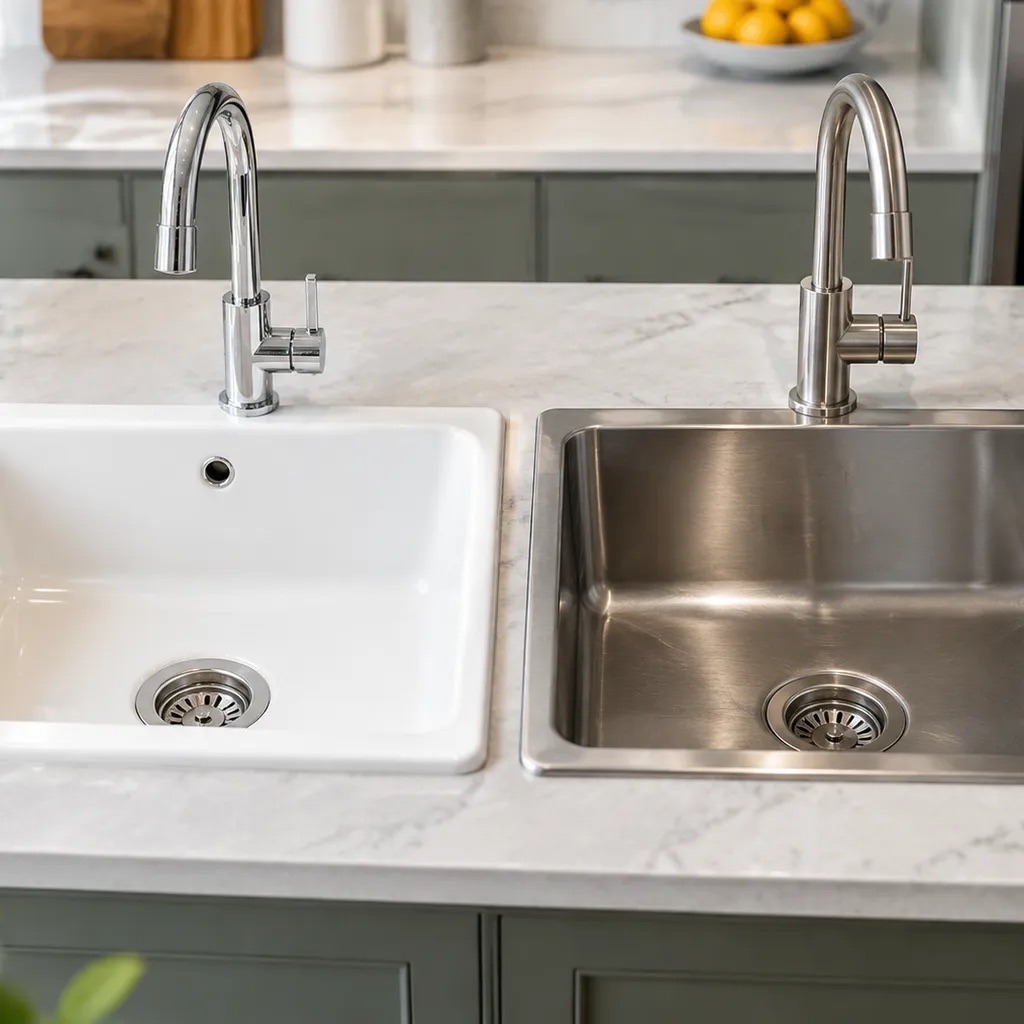
When evaluating a ceramic basin vs stainless steel basin comparison, your choice shapes both the look and daily utility of your space. We evaluate how both materials handle daily wear, impacts, and cleaning routines.
| Performance Factor | Ceramic Basin | Stainless Steel Basin |
|---|---|---|
| Scratch Resistance | Excellent; hard glaze resists scuffs | Moderate; develops fine micro-scratches |
| Impact Resistance | Rigid; vulnerable to heavy dropped items | Exceptional; absorbs impact without cracking |
| Stain Resistance | Impermeable; protects against cosmetics | High; prone to water spots and limescale |
| Sound Dampening | Naturally quiet and solid | Resonant; requires dampening pads |
| Aesthetic Profile | Classic, glossy, timeless | Minimalist, architectural, industrial |
Durability, Impact, and Scratch Resistance
In terms of surface hardness, ceramic leads the way. The fired, vitrified glaze creates exceptional scratch resistance, preventing fine marks from rings, grooming tools, and abrasive toiletries. However, ceramic is a rigid material: dropping heavy glass bottles or solid metal items from height can lead to chips or hairline fractures.
Stainless steel handles direct impact effortlessly. It provides remarkable dent resistance and will never crack or shatter, making it virtually indestructible under everyday bathroom conditions. Its main vulnerability is cosmetic wear; daily contact leaves a patina of minor surface scratches over time.
Aesthetic Appeal and Design Versatility
Ceramic basins deliver a timeless, clean look that integrates seamlessly with virtually any decor scheme, whether you are planning a comprehensive bathroom remodel or pairing it with a sage green bathroom oasis design with wall-hung basin. The deep, glass-like finish of a vitreous china or porcelain sink brings light into the room and balances natural textures like stone and wood.
Stainless steel basins provide an uncompromising industrial edge. Perfect for minimalist, commercial-inspired, or modern loft layouts, metal basins introduce sharp geometry and metallic contrasts, though they can sometimes feel sterile if not balanced with warm surrounding accents.
Daily Cleaning, Maintenance, and Stain Resistance
Ceramic is the standard for hassle-free maintenance and cleaning. The non-porous vitreous glaze offers robust stain resistance, preventing discoloration from hair dyes, toothpastes, soaps, and makeup. A quick wipe with a microfiber cloth and standard non-abrasive cleaner restores the shine instantly.
Stainless steel is naturally resistant to rust and corrosion, but maintaining a pristine appearance takes more effort:
- Water marks: Hard water leaves visible mineral spots if the surface is not wiped dry after use.
- Fingerprints: Brushed and polished metallic finishes show oils and smudges easily.
- Chemical caution: Harsh acids and bleaches must be rinsed away immediately to protect the protective chromium oxide layer.
Heat Resistance and Sound Dampening
Both materials boast outstanding heat tolerance, easily handling boiling water, hot styling tools, and sudden temperature shifts without warping or blistering.
Acoustic performance, however, separates the two:
- Ceramic: Heavy clay construction naturally absorbs vibrations. Water running against the basin produces a gentle, muted sound.
- Stainless steel: Thin metal gauges resonate significantly when struck by running water or toiletries. Quality units require thick rubber deadening pads or spray coatings on the underside to reduce this metallic ring.
Pros and Cons of Ceramic Basins
Ceramic basins remain the undisputed industry standard for domestic bathrooms. When engineering our bathroom spaces, we prioritize materials that handle daily moisture, hygiene products, and continuous use without degrading over time.
Advantages of Choosing Ceramic
Glazed ceramic washbasins deliver functional reliability and enduring design. In our design catalog, we consistently rely onceramic basins because they provide clear, tangible advantages:
- Superior scratch resistance: The fired glaze creates an impenetrable glass-like shield that resists daily scuffs, razor drops, and micro-abrasions.
- Non-porous hygiene: The sealed surface blocks moisture absorption, preventing bacteria, mold, and limescale from penetrating the core.
- Sound dampening: The natural density of vitreous china absorbs vibrations, keeping rushing tap water quiet compared to thin-gauge metals.
- Stain and chemical defense: Everyday bathroom essentials like toothpaste, cosmetics, soaps, and standard cleansers wipe away without staining or dulling the glossy finish.
- Style versatility: From wall-hung units to classic pedestal formats, ceramic effortlessly complements any contemporary or traditional aesthetic.
Disadvantages and Potential Drawbacks
While ceramic is our top recommendation for most home bathrooms, it does carry specific limitations you should consider:
- Susceptibility to impact chipping: Although exceptionally hard, ceramic is brittle. Dropping heavy objects, such as glass perfume bottles or metal tools, can cause surface chips or structural cracks.
- Substantial weight: Solid ceramic is heavy. If you plan to install a countertop ceramic basinor a wall-hung unit, your vanity unit or wall frame must be structurally reinforced to carry the load safely.
- Difficult repairs: Unlike metal, which can often be buffed or popped back into shape, a fractured ceramic bowl usually requires complete replacement.
Pros and Cons of Stainless Steel Basins
When weighing a ceramic basin vs stainless steel basin comparison for your next project, understanding the true functional trade-offs is essential. Stainless steel brings an industrial edge and functional resilience that traditional materials struggle to match in demanding environments.
Advantages of Choosing Stainless Steel
In our experience designing functional wash spaces, stainless steel basins deliver specific performance benefits that make them a standout alternative to a standard porcelain sink:
- Superior Dent Resistance and Impact Durability: Unlike ceramic or vitreous china, a stainless steel basin will not chip, crack, or shatter if a heavy bottle or tool drops into the bowl. This impact tolerance gives it an exceptional working lifespan.
- Natural Rust and Corrosion Defense: Engineered from high-grade alloys, these basins prevent oxidation and resist chemical wear from common soaps and cleansers, ensuring long-lasting surface integrity.
- Lightweight and Easy to Mount: The lighter physical profile puts far less strain on vanity tops and simplifies structural installation. For open-concept or floating designs, pairing them with sturdytriangular stainless steel basin shelf bracketsensures secure, reliable wall mounting without the need for bulky sub-structures.
- Hygienic and Non-Porous: The hard metallic surface prevents bacteria, mold, and grime from penetrating, which keeps daily maintenance and cleaning straightforward and sanitary.
- Modern Architectural Style: A brushed or polished metallic finish introduces a sleek, minimalist aesthetic that works seamlessly in industrial, urban, and modern luxury bathrooms alike.
Cost, Weight, and Installation Factors
When weighing a ceramic basin against a stainless steel basin, the choice often comes down to everyday logistics: what it costs upfront, how much structural support it demands, and how straightforward it is to fit into your layout. Both materials bring distinct structural and practical trade-offs to any bathroom remodel.
| Metric | Ceramic Basin | Stainless Steel Basin |
|---|---|---|
| Upfront Cost Range | Budget-friendly to high-end designer | Moderate to premium (gauge & finish dependent) |
| Material Weight | Heavy (dense vitreous china/fired clay) | Exceptionally lightweight |
| Countertop Support Needed | Reinforced vanity or heavy-duty wall brackets | Standard vanity or lightweight surface |
| Installation Ease | Requires careful handling to avoid chipping | Fast, flexible, and simple to position |
| Structural Risk | Can crack under excessive mounting torque | Pliable; will not fracture under pressure |
Initial Price and Long-Term Value
Ceramic basins deliver dependable long-term value across almost every budget tier. Entry-level glazed ceramic models are readily available and affordable, while luxury artisan designs command higher prices. Because the glazed surface offers exceptional scratch resistance and chemical resistance, a quality ceramic sink can easily last decades without losing its original gloss, provided it avoids sharp, heavy impacts.
Stainless steel basins vary widely in cost based on metal thickness and treatment. Thinner, entry-grade steel is budget-friendly, but high-grade 304 or 316 gauge basins with brushed, matte, or PVD finishes lean toward the higher end of the pricing spectrum. In terms of long-term value, stainless steel will never shatter, crack, or chip, giving it unmatched structural longevity, even though its surface will pick up micro-scratches and water spots over time.
Weight Differences and Countertop Support Needs
The physical mass of the basin dictates how you build and support your vanity space.
- Ceramic Basins: Glazed ceramic and vitreous china are dense, heavy materials. Wall-hung installations demand sturdy fixing bolts into solid masonry or reinforced timber studwork. Countertop and inset models require robust cabinetry that can safely bear the dead weight of the basin filled with water. When coordinating your setup, reviewing bathroom basins in wall hung, countertop, and undermountformats helps confirm whether your vanity can take the load.
- Stainless Steel Basins: Steel is remarkably lightweight. It places minimal mechanical stress on vanity tops and requires no specialized structural reinforcement. This makes steel an outstanding option for floating minimalist units, thin stone slabs, or retrofitted furniture where weight capacity is strictly limited.
Installation Difficulty and Plumbing Requirements
Both materials follow standard waste and trap dimensions, but the physical installation process differs noticeably.
Fitting a ceramic basin demands a steady hand. Overtightening waste fittings, pop-up assemblies, or mounting bolts can snap or hairline-crack the rigid clay, ruining the unit instantly. Ceramic pieces also display slight dimensional variances from the kiln firing process, requiring generous silicone bedding to create an even, watertight seal against the wall or counter.
Stainless steel offers superior installation ease. The material has slight flex, meaning it tolerates tightening without the danger of shattering. Cutout tolerances for drop-in or undermount steel bowls are more forgiving, and integrated sound-deadening pads or under-bowl coatings must be verified during fitting to keep water noise down during daily use.
Which Basin Material Is Right for You?
Deciding between these two fixtures comes down to your daily habits, your home's layout, and how much time you want to spend on maintenance and cleaning. In our Ceramic Basin vs Stainless Steel Basin: Comparison, both options bring clear functional strengths to a modern bathroom remodel.
| Priority Factor | Best Choice | Key Reason |
|---|---|---|
| Traditional & Family Bathrooms | Ceramic Basin | Natural sound-dampening, classic gloss finish, and high stain resistance. |
| High-Impact & Utility Zones | Stainless Steel Basin | Superior dent resistance, zero chipping risk, and ultra-lightweight profile. |
| Effortless Daily Cleaning | Ceramic Basin | Glazed vitreous surface resists watermarks and household chemicals easily. |
| Industrial Architectural Style | Stainless Steel Basin | Sleek metallic aesthetic that pairs naturally with contemporary urban hardware. |
When to Choose a Ceramic Basin
A ceramic basin—often compared to a traditional porcelain sink—is the ideal option if you want an enduring, timeless aesthetic that handles daily family traffic with ease.
- You prioritize quiet, low-maintenance living: The dense material absorbs water impact naturally, eliminating hollow echoing while resisting limescale and cosmetic stains.
- You want versatile mounting styles: Glazed ceramic pairs seamlessly with almost any vanity configuration, whether you are planning a countertop vs wall-hung basinlayout or a drop-in counter.
- You prefer a scratch-resistant surface: The hard-fired glaze resists micro-scratches from jewelry, watches, and regular scrubbing far better than bare metal.
When to Choose a Stainless Steel Basin
Opt for a stainless steel basin if maximum durability, lightweight handling, and a crisp architectural edge take priority in your space.
- You need unbreakable toughness: In spaces where heavy tools, metal accessories, or high-impact items might drop into the bowl, steel will never crack or shatter.
- You are outfitting a compact or minimalist space: The lightweight profile allows for clean, open-plan mounting supported by minimalist hardware like rectangular stainless steel basin shelf brackets without overloading wall anchors.
- You want an industrial design statement: The brushed metallic sheen delivers an urban edge that complements concrete, exposed brick, and matte black fixtures.
Frequently Asked Questions
Do ceramic basins chip or crack easily?
Ceramic basins do not chip or crack under standard daily use. The glazed vitreous china surface provides exceptional scratch resistance against toiletries, jewelry, and cleaning tools. However, dropping heavy, sharp objects from a height can chip the glaze. While stainless steel absorbs impact by denting rather than cracking, high-grade ceramic counter top basinsoffer far greater surface rigidity and retain their smooth finish without warping over time.
Which basin material is easiest to keep clean?
Ceramic is the clear winner for effortless maintenance and cleaning. Its non-porous, glazed finish actively resists stain absorption, limescale build-up, and chemical damage from soaps or cosmetics. A simple wipe with a damp microfiber cloth keeps it spotless. In contrast, stainless steel demands constant buffing and drying to prevent visible water spots, streaks, and fingerprints. For busy households, installing compact cloakroom ceramic basinskeeps day-to-day upkeep to an absolute minimum.
Are stainless steel basins louder than ceramic basins?
Yes, stainless steel basins produce noticeable running-water noise and metallic vibrations unless fitted with heavy sound-dampening pads underneath. Ceramic is a naturally dense, heavy material that absorbs acoustic vibrations effortlessly. Water running into a ceramic basin produces a soft, quiet flow, making it the superior choice for peaceful bathroom spaces.
Durovin Bathrooms are based in Walsall, UK and a bathroom supplier to mainland UK. We sell a wide range of products for anyone to improve their bathrooms.
Read More About UsAddress
Unit 14 Bentley Lane Industrial Park, Bentley Lane, Walsall, WS2 8TL
E-Mail us
info@durovinbathrooms.co.ukPhone
01922 627 773© Durovin Bathrooms® 2025