Sign up now to unlock Rewards offers.
Free standard next‑day delivery to most UK areas
Ceramic Basin vs Stone Basin Which Is Best for You
Ceramic Basin vs Stone Basin Which Is Better Compare durability care style cost and installation to choose the right bathroom basin
Overview: Ceramic Basins vs Stone Basins
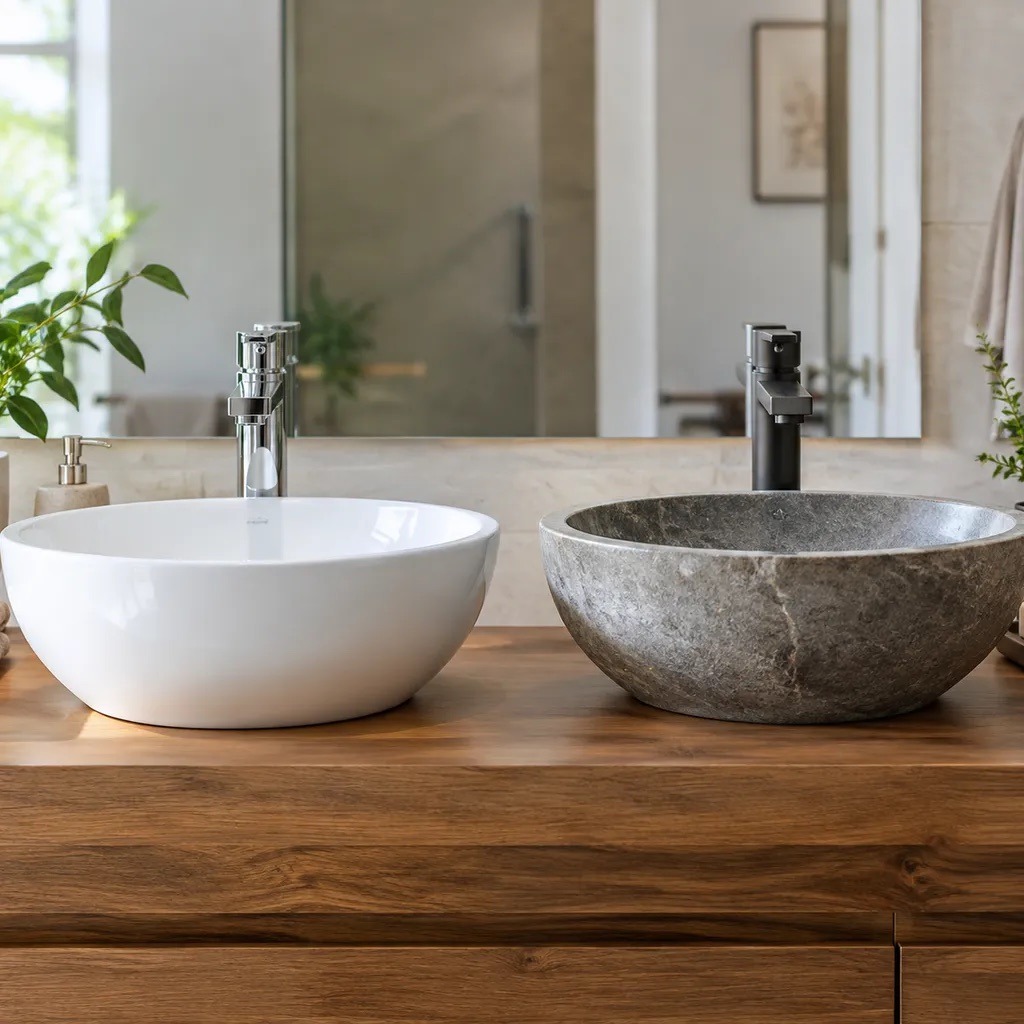
Selecting the right washbasin defines the visual presence, daily functionality, and longevity of any bathroom vanity. When deciding between a ceramic basin and a stone basin, homeowners and designers must weigh distinct material properties.
- Ceramic basins remain the industry benchmark for practical, low-maintenance daily hygiene.
- Stone basins serve as architectural statement pieces, offering tactile luxury and unique physical weight.
What Is a Ceramic Basin?
A ceramic basin is manufactured from natural clay, kaolin, quartz, and feldspar. The mixture is shaped, coated with a protective liquid glaze, and fired in a high-temperature kiln. This vitrification process creates an exceptionally dense, non-porous surface commonly recognized as vitreous china or fine fireclay.
- Material Profile: Fired clay sealed with an impervious glassy glaze.
- Surface Texture: Ultra-smooth, non-porous, and naturally hygienic.
- Common Applications: Undermount sinks, drop-in basins, and classic wall-hung fixtures.
What Is a Stone Basin?
A stone basin encompasses both carved natural stone and engineered stone composites. Natural stone washbasins are sculpted directly from raw mineral blocks such as marble, granite, limestone, or travertine. Engineered or stone resin models blend crushed natural stone minerals with specialized bonding polymers to achieve seamless forms.
- Material Profile: Solid natural quarry stone or refined composite stone resin.
- Surface Texture: Organic, tactile, and distinctively textured with a matte or honed feel.
- Common Applications: Countertop vessel sinks, freestanding monoliths, and bespoke luxury vanity units.
Key Differences: Ceramic vs Stone Basin Comparison
Choosing between materials comes down to daily performance, design needs, and long-term care. Here is how both options compare directly across core criteria:
| Feature | Ceramic Basin | Stone / Stone Resin Basin |
|---|---|---|
| Surface Finish | High-gloss or smooth matte glaze | Tactile, natural matte, or textured stone |
| Scratch Resistance | Excellent; hard vitrified glaze resists daily abrasions | Moderate; surface marks can often be sanded or buffed |
| Impact Resistance | Susceptible to cracking or chipping from heavy drops | High; solid composite build absorbs shock well |
| Water Absorption | Non-porous, practically zero absorption | Porous (natural stone) to low (engineered stone resin) |
| Weight | Moderate; fits standard bathroom vanity setups | Heavy; requires sturdy supports or solid flooring |
Durability, Scratch, and Chip Resistance
- Ceramic Basins: The high-temperature firing process creates a rock-hard vitrified layer. This glass-like barrier provides top-tier scratch resistance against daily toiletries, metal tools, and jewellery. However, sharp impacts from dropped heavy items can cause irreversible chips or hairline cracks.
- Stone Basins: Whether carved from solid rock or crafted as a composite, stone provides robust mass that resists shattering. While softer natural stone types can scuff, stone resin surfaces often allow minor scratches to be sanded out, preserving structural integrity over decades.
Porosity, Water Absorption, and Stain Resistance
- Ceramic Basins: The non-porous glaze locks out moisture completely. Hair dyes, soaps, and hard water run off easily, delivering effortless stain resistance with no moisture penetration.
- Stone Basins: Natural stone features open pores that soak up liquids, mineral deposits, and acidic bathroom products if left untreated. Regular sealing is essential to stop staining. In contrast, engineered stone and resin composites offer a much tighter cell structure, noticeably cutting down absorption while preserving a solid stone texture.
Aesthetic Appeal and Design Versatility
- Ceramic Basins: Ceramic remains the timeless standard for clean, crisp bathroom design. It suits minimalist, traditional, and functional layouts seamlessly, especially when integrated into practical configurations like a ceramic basin with free standing shelffor compact spaces.
- Stone Basins: Stone serves as a bold architectural focal point. Its organic texture, weight, and sculptural presence anchor high-end, spa-inspired bathrooms, making standalone pieces like a stone resin pedestal basin ideal for luxury renovations.
Weight and Installation Requirements
- Ceramic Basins: Lightweight and predictable, ceramic models mount securely to standard stud walls, standard bathroom vanity units, or floating brackets without demanding heavy structural modifications.
- Stone Basins: The sheer mass of solid or composite stone demands careful preparation. Countertops must support significant load limits, wall-hung units require reinforced backing, and freestanding versions require level, solid floors to prevent uneven stress on drainage fixtures.
Maintenance and Care Comparison
Everyday maintenance determines whether your sink retains its showroom look after years of daily washing. Between a standard vitrified glaze and natural or composite stone, the care routines differ substantially.
| Maintenance Factor | Ceramic Basin | Stone Basin |
|---|---|---|
| Daily Cleaner | Mild detergent, standard bathroom sprays | pH-neutral soap and warm water only |
| Chemical Tolerance | High; resists mild bleach and acidic cleansers | Low; acids and harsh solvents cause etching |
| Sealing Needs | None (non-porous glazed surface) | Periodic sealing required to stop staining |
| Scuff & Scratch Repair | Difficult; damaged glaze requires specialized filler | Sandable; surface scuffs can be buffed smooth |
How to Clean and Maintain a Ceramic Basin
Ceramic basins undergo high-temperature kiln firing that seals the outer glaze, creating a dense, non-porous glass shield. This makes routine cleaning straightforward:
- Daily wipe-down: A quick wipe using warm water and a microfiber cloth keeps soap film from accumulating.
- Cleaning agents: Everyday bathroom cleaners, mild limescale removers, and diluted bleach can be used safely without stripping the glossy glaze.
- Avoid harsh abrasives: Steel wool and wire scouring pads should stay away from the surface to prevent dulling the reflective topcoat.
For a broader breakdown on maintaining different vanity setups, refer to our comprehensive wash basin care guide.
Sealing and Care Routine for Stone Basins
Stone washbasins deliver a refined, organic texture, but their mineral structure demands a disciplined routine:
- Gentle washing: Use only pH-neutral liquid soap and warm water. Avoid bathroom cleaners containing lemon, vinegar, ammonia, or bleach, as acidic compounds cause permanent etching.
- Routine sealing: Natural stone and certain stone composites require a penetrating sealer applied once or twice a year to create a barrier against moisture, toothpaste, and cosmetic dyes.
- Moisture management: Never leave standing water or damp toiletries sitting inside the bowl. Wipe down the basin dry after evening use to prevent mineral deposits and water rings.
Repairability and Long-Term Wear
The way these two materials age under daily wear sets them apart over the long haul:
- Ceramic durability limits: Ceramic resists everyday scratches from jewelry or metal accessories better than unsealed stone. However, if a heavy object cracks or chips the glass finish, matching the original high-gloss glaze with patch kits is difficult, often leaving a visible mark.
- Stone restoration benefits: Stone is solid and homogeneous throughout. While softer and more prone to minor hairline scuffs, light surface marks can be gently buffed away using fine-grit finishing pads or stone polish, renewing the surface without replacing the unit.
Cost vs Long-Term Value
Upfront Purchase and Installation Costs
When comparing initial expenses, ceramic basins consistently offer a more accessible entry point. The manufacturing processes for glazed ceramic allow for standard sizing and lower overall production costs. Installation is straightforward, fitting effortlessly onto most standard bathroom vanity setups without requiring extra structural reinforcement.
Stone basins—whether natural stone washbasin options or engineered artificial stone sinks—sit at a higher price tier. The initial retail purchase demands a larger budget, and the installation costs often increase as well. Due to the significant weight of solid stone, your vanity or countertop may require additional support brackets, and professional installation is strongly advised to prevent handling damage.
- Ceramic Basins: Lower purchase price, lightweight, lower labor costs for mounting.
- Stone Basins: Premium initial price point, heavy material profile, specialized installation requirements.
Lifespan and Return on Investment
Both materials provide dependable long-term performance, but their return on investment is realized differently:
- Ceramic Basins: A quality porcelain sink offers reliable daily durability. The non-porous glaze resists routine wear with zero need for ongoing sealing, making it a dependable, low-effort investment for busy households.
- Stone Basins: Stone basins deliver unmatched luxury and durability that elevate the overall aesthetic of a property. While stone demands periodic sealing and maintenance to protect against moisture absorption, a well-kept stone basin lasts for decades and holds its value through timeless, high-end appeal.
Pros and Cons Breakdown
Choosing between ceramic and stone basins comes down to balancing daily practicality with architectural style. Both materials serve distinct design goals and functional demands in modern bathroom spaces.
Pros and Cons of Ceramic Sinks
A classic ceramic or porcelain sink remains the standard choice across global residential projects due to its proven track record and straightforward maintenance.
Pros: Non-porous glaze: Fired at high temperatures, the glossy surface naturally repels water, cosmetics, and common household chemicals. Effortless cleaning: Everyday dirt wipes away with mild soap, making it an ideal choice for high-traffic family bathrooms. Cost-effective: Generally more accessible upfront compared to carved natural stone or solid surface composites. Fade resistance: The vitreous enamel coating maintains its white tone without yellowing or degrading under sunlight.
Cons: Brittle impact resistance: Dropping heavy glass bottles or tools can chip or crack the glaze, which is difficult to repair invisibly. Design limitations: Ceramic molding typically produces soft, curved edges rather than razor-sharp modern profiles. Restricted textures: Most standard models only come in high-gloss finishes, lacking organic tactile variation.
Pros and Cons of Stone Sinks
Stone washbasins—including natural stone, sintered stone, and stone resin composites—deliver a high-end, tactile presence that elevates bathroom vanities. Choosing a stone resin pedestal freestanding oval wash basin instantly creates a sculptural focal point that ceramic rarely replicates.
Pros: Exceptional aesthetics: Features distinct mineral veining, organic textures, and clean matte finishes suited to contemporary interiors. Superior structural density: Solid stone and composite structures handle everyday physical wear and resist heavy impacts without shattering. Surface renewability: Light surface abrasions on solid composite stone can often be buffed and sanded out to restore the original finish. Versatile design formats: Stone adapts easily to sharp rectangular lines, floating vanities, and deep vessel basins.
Cons: Maintenance requirements: Natural varieties require periodic sealing to maintain proper stain resistance against colored liquids. Substantial weight: Heavier mass requires reinforced countertops, secure fixings, and careful handling during installation. Higher investment: Premium sourcing, precision cutting, and specialized fabrication involve a higher overall cost. For larger architectural layouts, reviewing the broader pros and cons of free standing sinks ensures structural compatibility before ordering.
The Verdict: Which Basin Material Is Better for You?
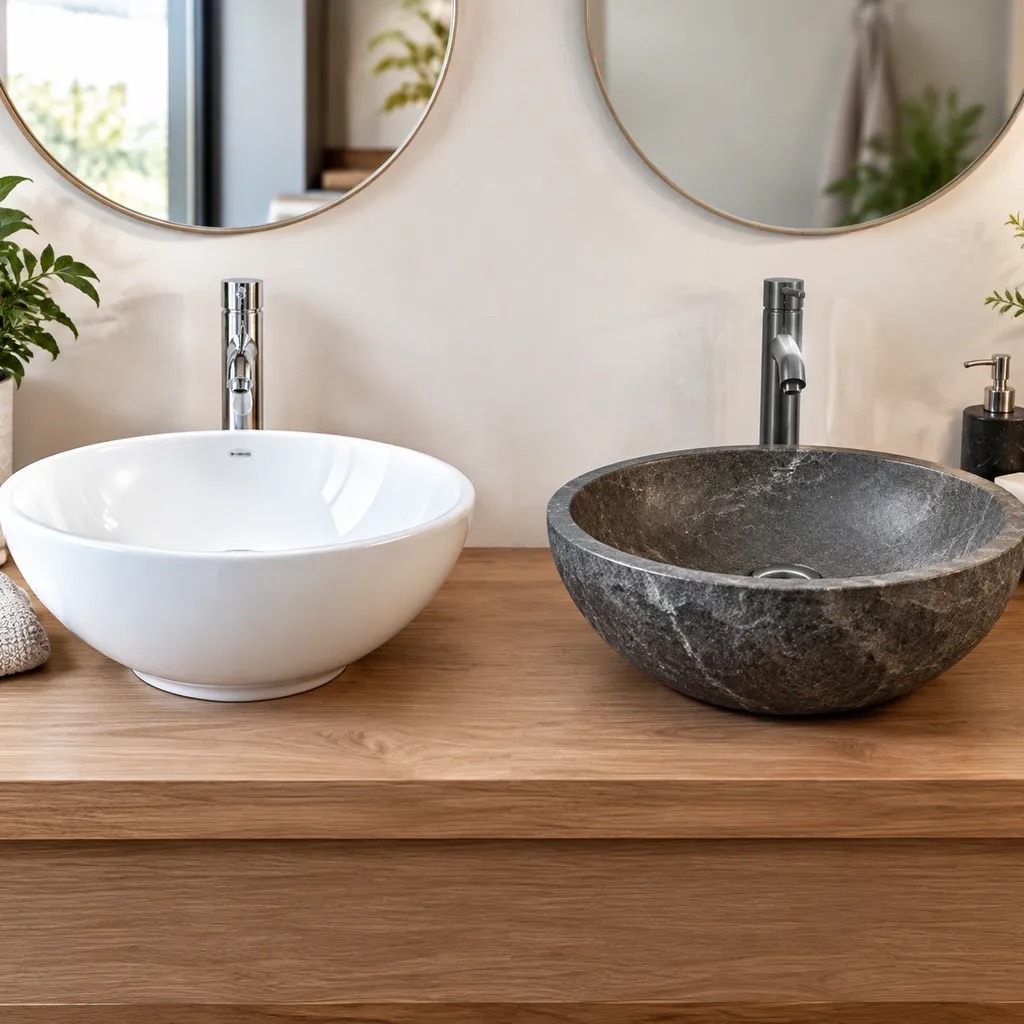
Deciding between a ceramic basin and a stone basin comes down to daily lifestyle, design preferences, and the level of maintenance you are willing to manage. Both materials deliver reliable performance when matched to the right environment.
| Decision Factor | Ceramic Basin | Stone Basin |
|---|---|---|
| Best Room Fit | Family bathrooms, guest baths, rentals | Master suites, powder rooms, luxury ensuites |
| Maintenance Level | Low; non-porous and wipe-clean | Moderate; requires sealing and pH-neutral cleaners |
| Visual Texture | Glossy, smooth, and clean | Matte, tactile, and sculptured |
| Chemical Resistance | High resistance to toiletries and pigments | Sensitive to acids, harsh solvents, and dyes |
| Structural Feel | Lightweight to standard; universal mounting | Solid, heavy, and structurally prominent |
When to Choose a Ceramic Basin
A ceramic basin remains the industry standard for reliable, everyday functionality. It is the best choice if you prioritize hassle-free care and enduring resistance against household wear.
- High-traffic households: Glazed ceramic resists scratching, hard water buildup, and daily wear without requiring specialized upkeep.
- Routine chemical and cosmetic exposure: The fired vitreous glaze forms an impermeable shield against everyday spills. To see how these surfaces handle intense pigments, explore does hair dye stain ceramic or stone resin basins to understand real-world material resistance.
- Streamlined budgets: Ceramic delivers an unbeatable balance of cost, longevity, and hygiene, making it ideal for standard vanity installations.
- Timeless aesthetics: A clean gloss or refined ceramic profile pairs effortlessly with contemporary and traditional bathroom vanity setups alike.
When to Choose a Stone Basin
A stone basin is an architectural statement designed for spaces where texture, weight, and visual presence take center stage.
- Luxury and boutique renovations: A natural stone washbasin or composite stone profile elevates a master suite into a high-end spa aesthetic.
- Statement focal points: The organic look of stone makes it an ideal centerpiece for a minimalist countertop or an open-shelf vanity unit.
- Tactile matte finishes: If you prefer stone-smooth, non-reflective surfaces over standard gloss ceramics, stone provides that distinct tactile appeal.
- Dedicated maintenance habits: Stone suits homeowners who do not mind applying occasional sealants and sticking to non-abrasive, pH-balanced cleaning routines.
Frequently Asked Questions
Do stone basins stain or scratch easily?
Natural stone is naturally porous, meaning that unsealed surfaces can absorb pigments from cosmetics, oils, and harsh chemicals. However, a properly treated stone basinoffers dependable stain resistance against everyday bathroom use. While softer natural stone washbasin profiles can pick up fine surface scratches over time, many solid composite surfaces allow light scuffs to be buffed out directly without leaving permanent blemishes.
Are ceramic basins fragile compared to stone?
A glazed ceramic or porcelain sink provides exceptional surface hardness, making it practically impervious to surface scratching from daily toiletries. The trade-off lies in impact brittleness. Dropping a heavy glass bottle or metal accessory can chip or crack the vitreous enamel, whereas solid stone materials absorb structural impacts with less risk of outright fracturing.
How often do stone bathroom basins need to be sealed?
Porosity dictates the sealing and maintenance schedule. For a raw natural stone washbasin mounted on a busy bathroom vanity, re-sealing every six to twelve months maintains optimal water repellency. In contrast, an engineered stone counter top basin formulated with non-porous mineral resins requires minimal ongoing sealing, needing only routine cleaning with mild, neutral detergents to preserve its finish.
Durovin Bathrooms are based in Walsall, UK and a bathroom supplier to mainland UK. We sell a wide range of products for anyone to improve their bathrooms.
Read More About UsAddress
Unit 14 Bentley Lane Industrial Park, Bentley Lane, Walsall, WS2 8TL
E-Mail us
info@durovinbathrooms.co.ukPhone
01922 627 773© Durovin Bathrooms® 2025