Sign up now to unlock Rewards offers.
Free standard next‑day delivery to most UK areas
Ceramic Basin vs Acrylic Basin Key Differences Guide
Ceramic Basin vs Acrylic Basin key differences in durability design maintenance cost and installation to help you choose the right bathroom basin
Understanding Ceramic and Acrylic Basins
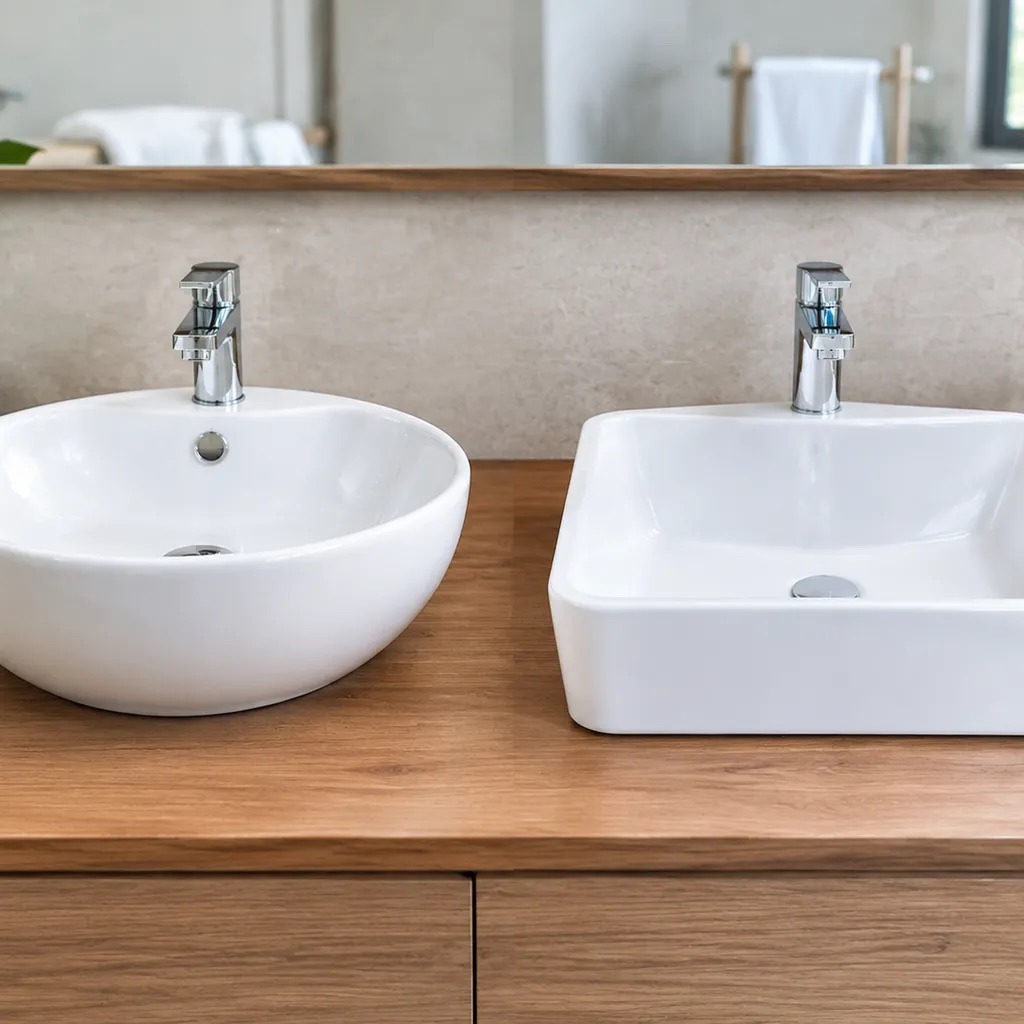
Selecting the right bathroom fixture starts with understanding the core raw materials. In modern bathroom design, the choice between a classic ceramic sink and a contemporary acrylic wash basin centers on composition, structural weight, and surface engineering. Both materials provide dependable daily functionality, yet each delivers a completely distinct tactile and practical experience.
What is a Ceramic Basin?
A ceramic basin is crafted from natural raw clay that is precision-shaped, sealed with a vitreous glaze, and fired in a high-temperature kiln. This traditional manufacturing process vitrifies the materials, creating a dense, non-porous fixture built for permanence.
- Core Composition: Kiln-fired natural clay and mineral blends coated with a glass-hard glaze.
- Surface Feel: A smooth, cold-to-the-touch finish with a signature reflective sheen.
- Structural Profile: Heavy, solid, and exceptionally rigid, providing maximum stability on bathroom vanity units and wall fixtures.
What is an Acrylic Basin?
An acrylic basin is manufactured from molded thermoplastic sheets, typically polymethyl methacrylate (PMMA), reinforced with synthetic backing compounds to ensure everyday structural integrity. This synthetic formulation allows for clean profiles and lightweight engineering.
- Core Composition: Thermoformed synthetic polymer sheets reinforced with structural backing layers.
- Surface Feel: A sleek, non-porous finish that naturally retains ambient room temperature, feeling noticeably warmer to the touch.
- Structural Profile: Lightweight and impact-absorbing, placing minimal mechanical load on mounting surfaces and furniture.
Pros and Cons of Ceramic Basins
When outfitting a modern bathroom, we often point homeowners toward ceramic fixtures for their unmatched resilience and classic visual appeal. However, understanding both the strengths and trade-offs of this traditional material ensures you choose the right fit for your space.
Advantages of Ceramic Basins
Kiln-fired clay paired with an impervious glazed finish gives ceramic distinct functional edges:
- Superior Scratch and Heat Resistance: The hardened glaze withstands everyday wear, sharp objects, and high temperatures without burning, scuffing, or dulling.
- Stain and Chemical Tolerance: The non-porous surface repels cosmetic dyes, toothpaste, and standard cleaning chemicals, preventing stubborn discoloration.
- Timeless Visual Appeal: Ceramic delivers a dense, reflective gloss that complements virtually any vanity setup. You can explore our extensive collection of ceramic basins to see how this classic material elevates everyday designs.
- Long Operational Lifespan: A quality ceramic sink resists aging and preserves its factory finish for decades under regular daily use.
Limitations of Ceramic Basins
Despite its durability, ceramic has several physical constraints to keep in mind:
- Substantial Weight: Ceramic fixtures are heavy and rigid. Installing setups likewall-hung ceramic basins requires reinforced wall framing and heavy-duty brackets to guarantee proper support.
- Vulnerability to Impact Cracks: While virtually scratch-proof, the material is brittle. A heavy object dropped from a height can cause chips, hairline fractures, or outright cracks that are difficult to repair cleanly.
- Rigid Design Geometries: Because ceramic shrinks during the kiln-firing process, sharp minimalist edges and ultra-complex custom profiles are more difficult to achieve compared to molded synthetic alternatives.
Pros and Cons of Acrylic Basins
When outfitting a practical space, an acrylic wash basin offers a versatile alternative to traditional materials. We balance design flexibility with everyday functionality across our synthetic fixtures to help you decide if this material matches your renovation plans.
Advantages of Acrylic Basins
- Lightweight and Manageable: Thanks to its lightweight synthetic construction, an acrylic basin puts far less strain on vanity units and drywall. This makes transit, handling, and solo DIY installations significantly easier.
- Impact Cushioning: Acrylic flexes slightly under blunt impact. Dropping a perfume bottle or tumbler is far less likely to cause sudden cracking or structural breakage compared to rigid fixtures.
- Warm to the Touch: Unlike cold porcelain, acrylic adapts quickly to room temperature. It feels noticeably warmer against the skin, delivering a comfortable, welcoming feel.
- Cost-Effective Modern Styling: Acrylic molds into sharp, clean, contemporary lines at an accessible price point, using the same reliable material engineering seen in modernstandard acrylic shower trays.
Limitations of Acrylic Basins
- Vulnerable Scratch Resistance: Acrylic is naturally softer than vitrified surfaces. Everyday contact with abrasive sponges, gritty pastes, or metal jewelry can cause fine surface scratches over time.
- Sensitivity to Heat and Chemicals: High temperatures from dropped curling irons or boiling water can warp or scorch the surface. Solvents, harsh bleaches, and acetone will strip the gloss finish.
- Potential for Flexing: If an acrylic basin lacks proper underside reinforcement or sturdy vanity support, it can flex slightly when bearing heavy downward weight.
- Specific Cleaning Needs: Preserving the sleek appearance demands strictly gentle, non-abrasive cleaning routines to prevent dull patches and localized discoloration.
Ceramic Basin vs Acrylic Basin: Key Differences
When selecting the ideal wash fixture, evaluating how materials perform under daily use is critical. While both styles serve modern bathrooms effectively, their physical properties, structural tolerances, and pricing vary substantially.
| Evaluation Metric | Ceramic Basin | Acrylic Basin |
|---|---|---|
| Durability & Scratch Resistance | High scratch and heat resistance; brittle under sharp impact | Prone to fine scratches and heat; absorbs impact without chipping |
| Weight & Installation | Heavy; requires solid wall reinforcement or sturdy vanity support | Lightweight; fast, single-person handling and fitting |
| Aesthetics & Finish | Timeless high-gloss glazed finish; rigid lines | Contemporary profiles; flexible synthetic molded contours |
| Maintenance & Hygiene | Non-porous glaze resists stains; standard cleaners permitted | Requires non-abrasive cleaners to preserve surface shine |
| Price Point & Lifespan | Higher initial cost; extended functional lifespan | Budget-friendly initial cost; faster aesthetic wear |
Durability and Scratch Resistance
A traditional ceramic sink provides unmatched surface hardness. Kiln-fired glazing creates an impenetrable layer that delivers exceptional scratch resistance against daily items like razors, metal accessories, and toiletries. It also resists heat effortlessly. However, ceramic is rigid, meaning heavy dropped items can cause chips or fractures.
An acrylic wash basin relies on synthetic thermoplastic polymers. This build flexes slightly under pressure, absorbing impacts that might crack fired clay. The trade-off is surface softness: acrylic is susceptible to fine swirl marks, abrasive scouring, and burns from high-heat styling tools. For deeper insight into how material compositions handle long-term wear, consult our wash basin guide covering types, materials, installation, and care.
Aesthetics and Design Flexibility
Ceramic delivers a crisp, glossy aesthetic that defines classic and luxury bathroom layouts. Its reflective, pristine glaze holds its depth permanently without yellowing or fading over time.
Acrylic offers immense design versatility thanks to injection molding. This allows for sharper contours, integrated ledges, and seamless joins. While acrylic presents a sleek, contemporary appearance, the finish carries a softer sheen compared to the deep glass-like luster of fired porcelain.
Weight and Ease of Installation
Weight plays a direct role in installation requirements:
- Ceramic Basins: Substantially heavier, requiring two-person handling, solid masonry anchors, or dedicated furniture support. Pairing heavier profiles with tailored frameworks—such as ourceramic basin with free-standing shelf and metal legs—ensures load-bearing stability without putting excess stress on wall fixtures.
- Acrylic Basins: Lightweight and manageable, making them a practical choice for stud walls, lightweight countertops, and rapid trade or DIY installations.
Maintenance, Hygiene, and Cost
Maintaining hygiene in a bathroom vanity basin comes down to surface porosity. The non-porous vitrified glaze of ceramic repels water, limescale, and bacteria. It easily tolerates standard household disinfectants and bleach without dulling. While the upfront investment is higher, its extended operational lifespan delivers superior long-term value.
Acrylic fixtures are warmer to the touch and resist stubborn staining if cleaned promptly, but they demand gentle care. Abrasive powders or harsh chemical solvents can scour the synthetic finish, leaving a cloudy surface over time. Acrylic remains the more budget-accessible option upfront, making it a reliable pick for cost-sensitive updates.
Key Factors to Consider Before Buying
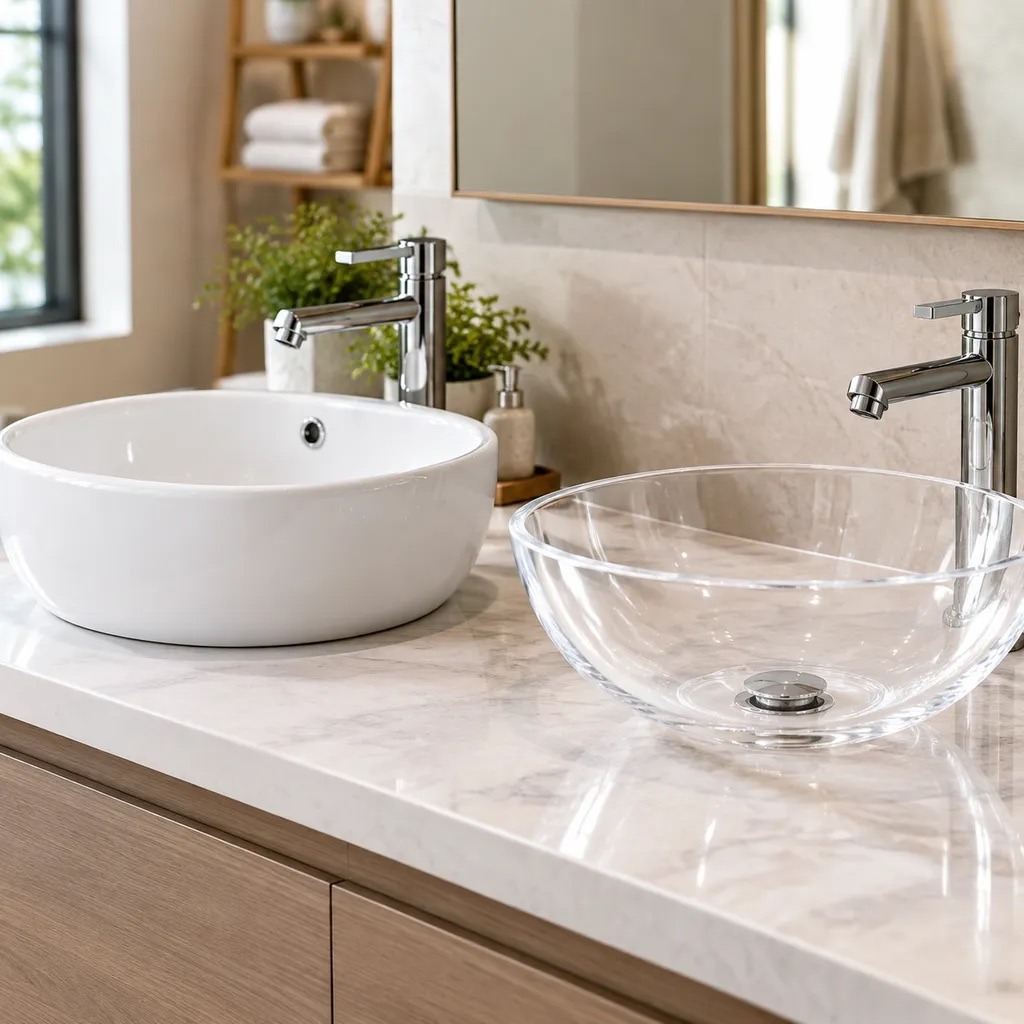
Choosing between a ceramic basin and an acrylic unit comes down to aligning the fixture with your practical requirements and renovation plans. Taking stock of how the space functions daily prevents costly replacements later on.
Bathroom Style and Vanity Compatibility
The physical structure of your bathroom cabinetry determines the ideal fixture type.
- Weight distribution: A solid ceramic sink demands robust vanity support and rigid wall fixings due to the weight of kiln-fired clay. In contrast, an acrylic wash basin sits comfortably on lightweight frames and floating modular furniture.
- Profile matching: Traditional and transitional interiors benefit from the classic gloss and sharp rim profiles of ceramics. Minimalist and ultra-contemporary spaces often pair better with the fluid, molded contours of synthetic acrylic designs.
- Layout solutions: For tailored installations or compact counter designs, selecting dedicated bathroom basins for modern vanity tops and small spaces ensures the plumbing connections match the furniture dimensions.
Usage Frequency and Household Needs
Evaluating daily traffic helps determine which material holds up best over time.
- Family and main bathrooms: Heavy-use areas experience continuous contact with metal items, razors, and varied toiletries. Ceramic surfaces offer high scratch resistance against abrasive contact, keeping the finish intact under rough handling.
- Cloakrooms and guest suites: Secondary bathrooms encounter less frequent use. Acrylic basins deliver a practical, cost-effective solution here, where heavy impacts and harsh cleaning chemicals are rarely a concern.
- User safety: The slightly warmer, shock-absorbing surface of synthetic acrylic minimizes the chance of heavy items shattering if accidentally dropped onto the bowl.
Budget and Long-Term Value
Looking at the initial purchase price alongside the product's operational lifespan clarifies true value.
| Factor | Ceramic Basin | Acrylic Basin |
|---|---|---|
| Initial Purchase Cost | Mid-to-high upfront expense | Budget-friendly entry point |
| Installation Complexity | Requires reinforced vanity or wall mountings | Straightforward handling, lower fitting strain |
| Aesthetic Retention | Glaze resists fine surface scratches for decades | Prone to surface dulling under heavy wear |
| Overall Lifespan Value | Superior long-term investment | High short-term savings for quick refits |
Which Basin Material is Right for You?
Choosing between a ceramic basin and an acrylic wash basin comes down to daily wear, structural support, and project scope. Both materials serve distinct bathroom setups, depending on whether the priority is long-term resilience or lightweight versatility.
| Project Factor | Ceramic Basin | Acrylic Basin |
|---|---|---|
| Best Placement | Master baths, high-traffic family bathrooms | En-suites, cloakrooms, guest bathrooms |
| Primary Strength | Superior scratch resistance and heat tolerance | Impact resilience and easy handling |
| Installation Demand | Requires sturdy mounting or reinforced vanity | Simple handling, ideal for lightweight structures |
| Material Base | Kiln-fired glazed clay | Molded synthetic polymer |
| Expected Longevity | Decades with proper care | Moderate; subject to surface wear over time |
When to Choose a Ceramic Basin
A traditional ceramic sink remains the gold standard for enduring bathroom upgrades. Choose ceramic if:
- High traffic is expected daily: The hardened vitreous surface resists heavy use, making it ideal for family bathrooms where toiletries, hair tools, and abrasive elements are present.
- You want top-tier scratch resistance: Glazed ceramic prevents surface dulling and withstands regular cleaning routines without losing its gloss.
- You are pairing it with solid furniture: When planning a permanent installation on a sturdy bathroom vanity basin, the weight of ceramic provides a solid, high-end feel.
- You are investing for the long run: If replacing fixtures every few years is not an option, ceramic delivers unmatched material longevity.
When deciding on installation setups, whether you are comparing a countertop vs wall hung basinor mounting directly to cabinetry, ensure the supporting wall or vanity is rated for the heavier load of glazed ceramic.
When to Choose an Acrylic Basin
An acrylic wash basin provides practical advantages where weight, maneuverability, and cost efficiency lead the project requirements. Choose acrylic if:
- Weight is a major constraint: Acrylic is significantly lighter than ceramic, putting minimal stress on delicate mounting surfaces, thin vanity countertops, or stud walls.
- You are outfitting compact spaces: When implementing small bathroom basin space-saving ideas, lightweight synthetic fixtures allow for quick, flexible placement in tight cloakrooms or secondary powder rooms.
- Fast, low-cost replacement is the goal: Rental units, quick cosmetic flips, or utility bathrooms benefit from the lower upfront expense of molded synthetic units.
- Impact absorption matters: While softer against fine surface scuffs, acrylic absorbs accidental bumps without shattering or chipping as easily as rigid porcelain.
Frequently Asked Questions About Acrylic and Ceramic Basins
Do Acrylic Basins Scratch or Stain Easily?
Yes, an acrylic wash basin is far more susceptible to surface abrasions than a traditional ceramic sink. Because acrylic is a softer synthetic material, coarse cleaning sponges, dropped metal items, and abrasive cleaners will dull or scratch its top layer over time.
While standard daily grime washes away smoothly, aggressive colorants and harsh chemicals can penetrate unglazed or worn synthetic finishes. To keep your bathroom vanity basin looking pristine, stick to gentle liquid detergents and soft microfiber cloths. For comparison on how glazed fixtures resist stubborn chemical pigments, explore our guide onhow hair dye impacts ceramic surfaces.
Can a Cracked Ceramic Basin Be Repaired?
Minor surface chips or hairline cosmetic scuffs can occasionally be filled using specialized porcelain repair kits. However, if a crack runs deep into the core body of the ceramic basin, repair is rarely permanent or safe.
- Structural Integrity: Deep fractures weaken the unit, risking sudden failure or water leakage into your vanity unit.
- Sanitation: Cracks harbor trapped moisture, bacteria, and grime that cannot be cleaned out of the porous inner clay.
- Best Solution: Once fully cracked through, the only reliable fix is a complete replacement.
Which Material Offers a Longer Lifespan?
A ceramic sink consistently delivers a far longer operational lifespan. The kiln-fired glaze creates a non-porous shield with exceptional scratch resistance, heat tolerance, and structural rigidity that holds up against heavy daily traffic for decades.
An acrylic basin provides a cost-effective, lightweight solution for lower-traffic spaces or budget installations, but its synthetic surface will inevitably show fine scratches, dullness, and cosmetic wear much sooner under regular household demands.
Durovin Bathrooms are based in Walsall, UK and a bathroom supplier to mainland UK. We sell a wide range of products for anyone to improve their bathrooms.
Read More About UsAddress
Unit 14 Bentley Lane Industrial Park, Bentley Lane, Walsall, WS2 8TL
E-Mail us
info@durovinbathrooms.co.ukPhone
01922 627 773© Durovin Bathrooms® 2025