Sign up now to unlock Rewards offers.
Free standard next‑day delivery to most UK areas
Bathroom buying guide
Ceramic Wash Basin: A Complete Guide
A ceramic wash basin combines timeless style with everyday practicality. Explore the different types, how to choose the right size and installation, and simple ways to keep your basin looking its best.
From ceramic basin sizes and tap compatibility to installation styles and limescale care, this guide helps you compare the details that matter before buying.
What Is a Ceramic Wash Basin?
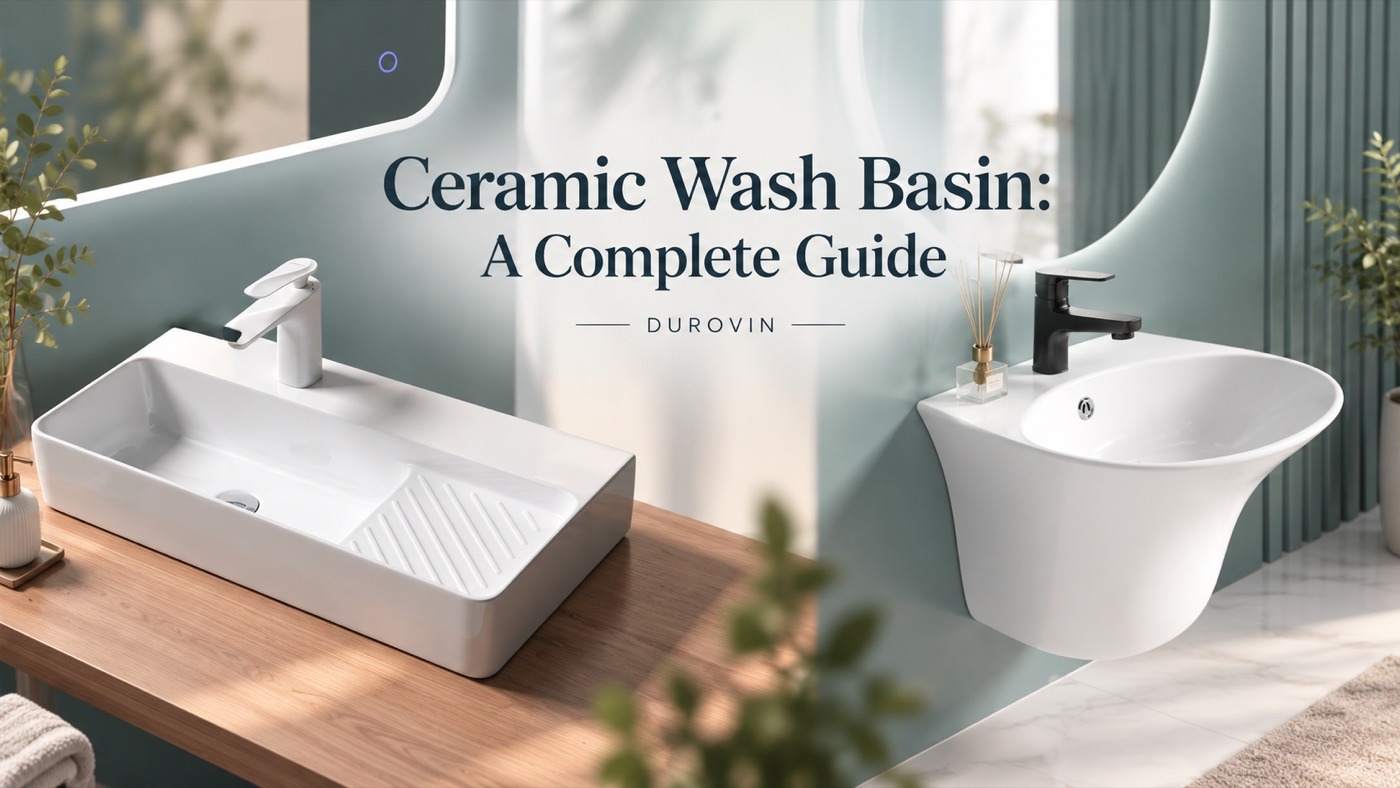
A ceramic wash basin is a bathroom fixture made from ceramic materials that are shaped and fired at high temperatures, typically with a smooth glazed finish. This hard, generally non-porous surface helps resist everyday staining and makes regular cleaning straightforward.
White ceramic wash basins are particularly versatile: they complement natural wood, stone-effect surfaces, neutral tiles and both chrome and black tap finishes. From compact cloakroom models to statement countertop designs, ceramic suits many bathroom layouts.
How ceramic bathroom basins are manufactured
Although production methods differ, ceramic basins are generally formed from prepared clay-based materials, dried, glazed and fired in a kiln. The firing process hardens the body, while the glaze provides the familiar smooth, glossy surface. The result is a bathroom fixture that feels solid and is designed for regular contact with water.
Not all ceramic products use exactly the same formulation or firing process. Terms such as vitreous china and fireclay may appear in product descriptions, and their properties can differ. Rather than choosing on terminology alone, check the product specification, finish, installation requirements and care guidance.
Why white ceramic remains popular
A white ceramic bathroom basin reflects light and coordinates with many bathroom schemes. It can sit comfortably against warm oak-effect cabinetry, pale stone tiles or darker wall colours. White also makes it easier to notice residue that needs cleaning, although water marks may be more visible in hard-water areas.
Benefits of Ceramic Wash Basins
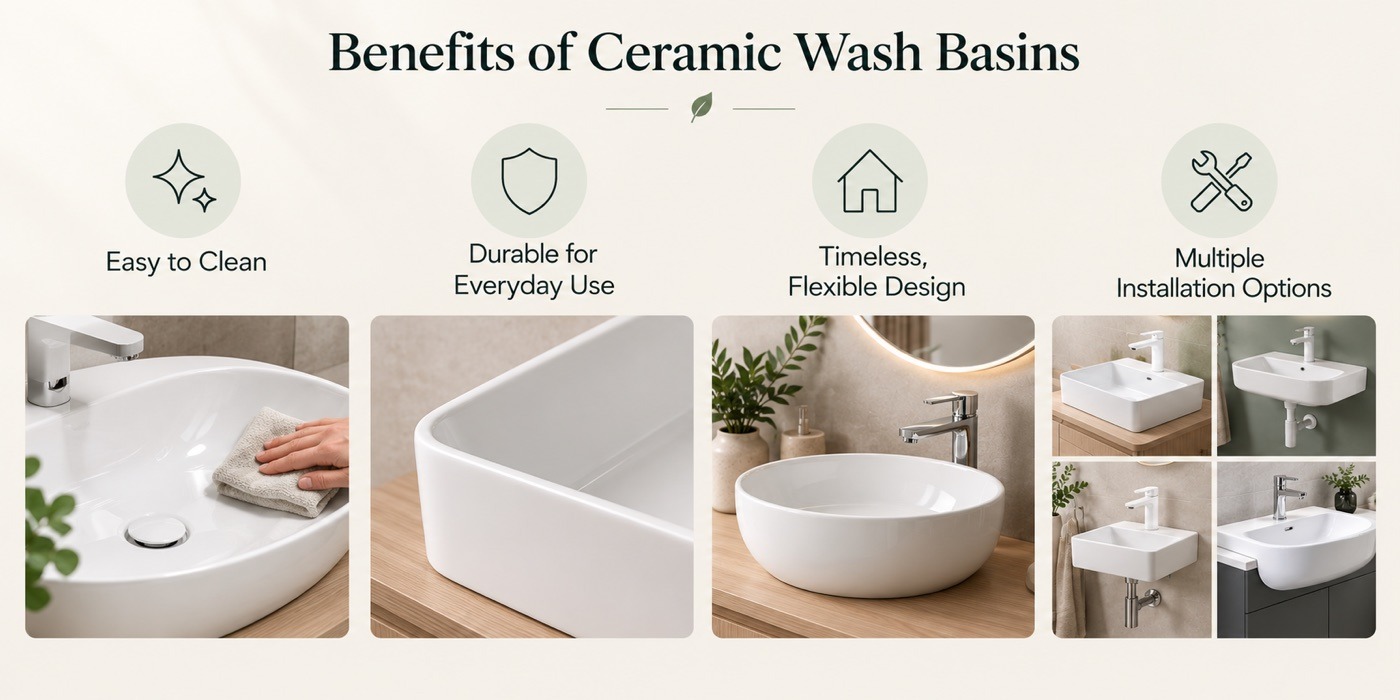
Easy-to-clean glazed surface
The smooth finish helps prevent everyday soap residue and dirt from becoming embedded in the material. A soft cloth and suitable bathroom cleaner are usually enough for routine care.
Durability for everyday use
Ceramic is hard-wearing under normal bathroom conditions, although heavy impacts can still cause chips or cracks. Proper installation and gentle maintenance help preserve the finish.
Timeless, flexible design
A modern ceramic wash basin can look equally at home in a minimalist en-suite or a traditional family bathroom. Round, oval and rectangular shapes create different visual effects.
Multiple installation options
Countertop, wall-hung, cloakroom and semi-recessed styles provide choices for different room sizes, storage needs and plumbing arrangements.
Suitable for different bathroom routines
For a main family bathroom, the priority might be a comfortable bowl and straightforward cleaning. In a guest cloakroom, the most important consideration may be a smaller footprint. Ceramic offers designs for both situations, but the right shape and installation method matter just as much as the material.
What are the limitations of ceramic?
It is worth considering the trade-offs alongside the benefits. Ceramic can be relatively heavy, so appropriate support is essential. A hard impact can chip the glaze or crack the body, and damaged areas may be difficult to restore invisibly. Glossy finishes can also show dried water droplets or limescale, especially where the water supply is hard.
These are not necessarily reasons to avoid ceramic. They simply underline the value of correct installation, suitable cleaning products and choosing a basin that fits your household's routine.
Types of Ceramic Wash Basins
Different ceramic basin styles affect how the basin looks, how much room it uses and what supporting furniture or fixings are needed.
01 · Statement style
Ceramic Countertop Basins
A countertop ceramic basin sits on a suitable vanity or worktop, creating a focal point. Check the combined worktop and basin height, tap reach and waste arrangement.
Explore ceramic countertop basins ↗02 · Open floor space
Ceramic Wall-Hung Basins
A wall-mounted ceramic basin leaves the floor below clear, helping compact bathrooms feel more open. The wall structure and fixing system must support the installation.
Explore ceramic wall-hung basins ↗03 · Compact rooms
Ceramic Cloakroom Basins
A small ceramic wash basin can work well in a downstairs toilet or narrow en-suite. Check its projection, door clearance and position relative to nearby fittings.
Explore ceramic cloakroom basins ↗04 · Furniture integration
Ceramic Semi-Recessed Basins
A semi-recessed basin fits partly into a compatible vanity or worktop, with the front projecting outward. It can suit shallower furniture where storage is needed.
Explore ceramic semi-recessed basins ↗Which ceramic basin style suits your room?
For a design-led en-suite, a countertop basin can work as a feature on a vanity unit. Where keeping the floor clear is a priority, a wall-hung basin may be more suitable. A small ceramic wash basin is often the practical answer in a narrow cloakroom, while a semi-recessed model can combine a usable bowl with shallower storage furniture.
Some designs can overlap in purpose: a compact wall-hung basin may also be described as a cloakroom basin. Focus on the actual dimensions and mounting requirements rather than relying on the category name alone.
How to Choose the Right Ceramic Wash Basin
1. Measure the space
Check available width, depth and projection, plus the clearance needed for doors, drawers and nearby fixtures. Ceramic basin sizes vary by model, even within the same style.
2. Consider installation requirements
Countertop designs need a suitable supporting surface; wall-hung models require appropriate structural support and fixings; semi-recessed basins need compatible furniture and cut-outs. When replacing a basin, also check existing plumbing positions.
3. Check tap holes, overflow and waste
Some ceramic basins have a tap hole for a deck-mounted mixer; others suit wall-mounted or separate countertop taps. Confirm whether the basin has an overflow and select a compatible waste, trap and tap arrangement.
4. Coordinate the bathroom style
White ceramic wash basins pair naturally with neutral tiles, warm timber and metallic fittings. Rectangular basins give a structured look, while oval and round styles introduce softer lines.
5. Prioritise daily comfort
For a family bathroom, a generous washing area may be helpful; for a small cloakroom, a compact projection may matter more. Balance the visual design with access, storage and cleaning needs.
6. Look at bowl shape and usable depth
Two basins with similar overall widths can feel very different in use. A broad rim may reduce the internal washing area, while a shallow bowl may be more prone to splashing with a high-flow tap. Compare the usable bowl shape, depth and tap position, not just the outside dimensions.
Square and rectangular ceramic basins often suit structured interiors, whereas round or oval designs can soften a room with many straight lines. For an everyday handwashing basin, choose a shape that leaves enough comfortable room beneath the tap.
7. Plan the finished height
For a countertop basin, consider the combined height of the cabinet, worktop and basin. A tall vessel on a standard-height unit may end up uncomfortable for some users. For wall-hung basins, the mounting height should suit the intended users and the installation instructions. There is no single ideal height for every household.
8. Consider cleaning access
Look at the gap between the basin and the wall, the position of the tap and how easily you can wipe around the waste. Tight spaces behind a countertop basin can collect splashes and dust. A neatly installed basin with sensible access is usually easier to maintain over time.
Planning Your Ceramic Basin Installation
Even when the basin itself is straightforward, the installation needs careful planning. Before ordering, compare the product's technical drawing with your room measurements and existing plumbing. Check whether taps, waste fittings, traps and fixing hardware are included or must be purchased separately.
Countertop installation considerations
A countertop ceramic basin needs a stable, suitable worktop and correctly positioned waste opening. If using a tall basin mixer, confirm the spout reaches into the bowl and allows comfortable handwashing. A wall-mounted tap requires its own plumbing arrangement and suitable reach. Leave enough space to clean behind the basin and around the tap.
Wall-hung installation considerations
A wall-hung basin transfers its load to the wall and fixing system. The wall construction, suitable anchors or support frame, and manufacturer's instructions all matter. Decorative wall finishes alone are not structural support. Where necessary, ask a qualified installer to assess the wall before purchasing.
Semi-recessed and furniture-mounted installation
For a semi-recessed basin, the furniture cut-out must match the specified template or measurements. Consider the location of drawers and shelves inside the cabinet, as the waste and trap need room. Check that the projecting front of the basin will not obstruct a narrow walkway.
Before you order
Confirm the basin's overall dimensions, fixing requirements, tap-hole configuration, overflow status, compatible waste and whether the product is suitable for your chosen furniture.
Ceramic Wash Basin vs Other Materials
Material choice influences appearance and care requirements. Individual product finishes can vary, so always check the manufacturer’s guidance.
| Feature | Ceramic | Stone resin | Natural stone |
|---|---|---|---|
| Appearance | Classic, often glazed | Contemporary; finish varies | Unique patterns and textures |
| Surface | Hard and smooth | Depends on formulation | Depends on stone and treatment |
| Cleaning | Usually straightforward | Product-specific guidance | May need specialist products |
| Maintenance | Routine gentle cleaning | Depends on finish | Some types require sealing |
For many homes, ceramic offers a useful combination of classic appearance, easy everyday care and design variety.
Choosing a Ceramic Basin Shape for Your Bathroom
Rectangular and square ceramic basins
Rectangular ceramic basins complement linear vanity units, large-format tiles and contemporary bathroom furniture. Their defined edges can look especially neat in modern spaces. Check the internal corners and usable bowl area, as a wide external shape does not always mean a larger washing space.
Round and oval ceramic basins
Curved basins bring a softer feel to bathrooms with angular cabinetry. An oval countertop ceramic basin can work particularly well on a timber-effect or stone-look surface. Allow enough worktop space around the bowl for taps and everyday accessories.
Compact and asymmetric designs
Some compact ceramic basins use offset tap ledges, narrow projections or asymmetric bowl shapes to make better use of limited space. These designs can be helpful in cloakrooms, but the orientation and location of the tap are important. Check whether the product is handed or available in different configurations.
Coordinating finishes and accessories
White ceramic pairs naturally with chrome fittings for a bright, understated finish. Black taps can create contrast, while warm metallic finishes can add a softer accent. Choose accessories with a consistent style, but prioritise tap and waste compatibility over appearance alone.
How to Clean and Maintain a Ceramic Wash Basin
Good ceramic basin maintenance is simple when done regularly. Follow the product manufacturer’s cleaning advice.
- Wipe the surface using a soft cloth or non-abrasive sponge.
- Apply a suitable bathroom cleaner according to its instructions.
- Rinse away residue and dry when necessary to reduce water marks.
- For limescale, use a compatible limescale remover, respecting the recommended contact time.
- Avoid abrasive scouring pads, harsh chemicals and heavy impacts.
Care tip
Always check cleaner compatibility with taps, sealants and surrounding surfaces. Never mix cleaning chemicals.
Preventing water marks and soap build-up
In areas with hard water, droplets can dry into visible mineral deposits. A quick rinse and occasional wipe dry can reduce build-up, particularly around the tap base and waste. Remove toothpaste and soap residue before it dries into stubborn marks.
What to avoid when cleaning ceramic
Do not assume that every household cleaning product is suitable. Abrasive powders and rough pads can dull or scratch surfaces, while some strong chemicals may damage metal finishes, sealants or surrounding furniture. Always read the cleaner label and the basin manufacturer's guidance. Never mix cleaning chemicals.
What if a ceramic basin chips or cracks?
Minor cosmetic damage and structural cracks are not the same issue. A crack that leaks or affects the basin's integrity needs prompt professional assessment and may require replacement. For small chips, seek product-specific advice before attempting any repair; a generic repair kit may not match the original glaze or be suitable for the affected area.
Common Mistakes to Avoid
- Choosing the wrong size: an oversized basin can obstruct movement or nearby doors.
- Overlooking tap compatibility: tap-hole configurations vary between models.
- Ignoring the overflow: the waste must suit the basin’s overflow arrangement.
- Forgetting storage: decide whether a vanity unit is needed before selecting the basin type.
- Assuming every wall supports a wall-hung basin: check structural and fixing requirements.
- Using unsuitable cleaners: abrasive products can damage the finish and fittings.
A Practical Ceramic Wash Basin Buying Checklist
Before making a final decision, use this checklist to compare ceramic wash basin options against your bathroom rather than choosing by appearance alone.
- Room dimensions: Measure width, depth, projection and the clearance around doors and nearby fittings.
- Installation type: Decide between countertop, wall-hung, cloakroom and semi-recessed styles.
- Support and furniture: Confirm the wall or vanity can accommodate the basin and its fixings.
- Tap arrangement: Check tap-hole location, spout reach and required tap type.
- Waste and overflow: Select compatible fittings for the specific basin model.
- Daily use: Consider internal bowl space, splash control and ease of cleaning.
- Product details: Review the technical drawing, included components and care instructions.
If you are replacing an existing basin, it may be simpler to choose a model compatible with your current plumbing. If you are redesigning the bathroom, you may have more freedom to adjust the tap and waste positions as part of the project.
Frequently Asked Questions About Ceramic Wash Basins
Is ceramic a good material for a bathroom basin?
Yes. Ceramic is popular for its smooth glazed finish, timeless appearance and straightforward everyday maintenance. Avoid heavy impacts that may cause chips or cracks.
What is a ceramic wash basin made of?
It is made from ceramic materials shaped and fired at high temperatures, typically with a glazed surface. Composition varies by manufacturer.
How long do ceramic basins last?
A properly installed and maintained ceramic basin can remain functional for many years. Lifespan depends on product quality, use and care.
Do ceramic basins stain easily?
Properly glazed ceramic generally resists everyday stains, but deposits and marks can build up if the basin is not cleaned regularly.
What size basin is best for a small bathroom?
A compact cloakroom basin or a suitable wall-hung design can preserve space. Measure width, projection and clearances before choosing.
Is a countertop or wall-hung basin better?
Countertop basins work well as design features on vanity furniture; wall-hung basins keep the floor clear. The best choice depends on space and storage needs.
Can you use any tap with a ceramic wash basin?
No. The tap must suit the basin’s tap-hole configuration, dimensions and installation arrangement.
How do you remove limescale from a ceramic basin?
Use a compatible limescale remover according to its instructions, wipe gently, rinse thoroughly and avoid abrasive materials.
Are ceramic basins suitable for a busy family bathroom?
Yes, provided the size and installation suit the household. A ceramic basin's glazed surface is generally straightforward to clean, but it should still be protected from heavy impacts and maintained with suitable products.
Does a ceramic basin need an overflow?
Not every ceramic basin includes an overflow. Check the product specification and select a compatible waste for the basin's configuration. The correct arrangement also depends on the installation.
Can I replace a basin without changing the plumbing?
Sometimes, but it depends on the new basin's waste position, tap configuration and mounting dimensions. Compare the technical drawings and ask an installer if you are unsure.
Are ceramic countertop basins practical for everyday use?
They can be. The key is to coordinate the basin height, worktop, tap reach and bowl depth so that washing is comfortable and splashing is controlled.
Explore the collection
Find the Right Ceramic Wash Basin
Discover ceramic wash basins for contemporary bathrooms, compact cloakrooms and practical vanity arrangements. Compare the available designs and check each product’s dimensions and fitting requirements.
All Ceramic Basins ↗Countertop ↗Wall Hung ↗Cloakroom ↗Semi-Recessed ↗
Durovin Bathrooms · Ceramic Wash Basin Guide
Durovin Bathrooms are based in Walsall, UK and a bathroom supplier to mainland UK. We sell a wide range of products for anyone to improve their bathrooms.
Read More About UsAddress
Unit 14 Bentley Lane Industrial Park, Bentley Lane, Walsall, WS2 8TL
E-Mail us
info@durovinbathrooms.co.ukPhone
01922 627 773© Durovin Bathrooms® 2025